
REGENERATIVE CARE · SKIN & HAIR
Exosomes & Hair Restoration Research
Exploring Emerging Approaches to Hair and Scalp Health
Exosomes and other extracellular vesicles are being investigated for their potential roles in cellular communication and hair-follicle biology. Learn about the emerging research, current limitations, and established options for evaluating hair loss.
Exosome-based treatments for hair loss are investigational and are not FDA-approved.

Scientific foundation
Understanding Exosomes
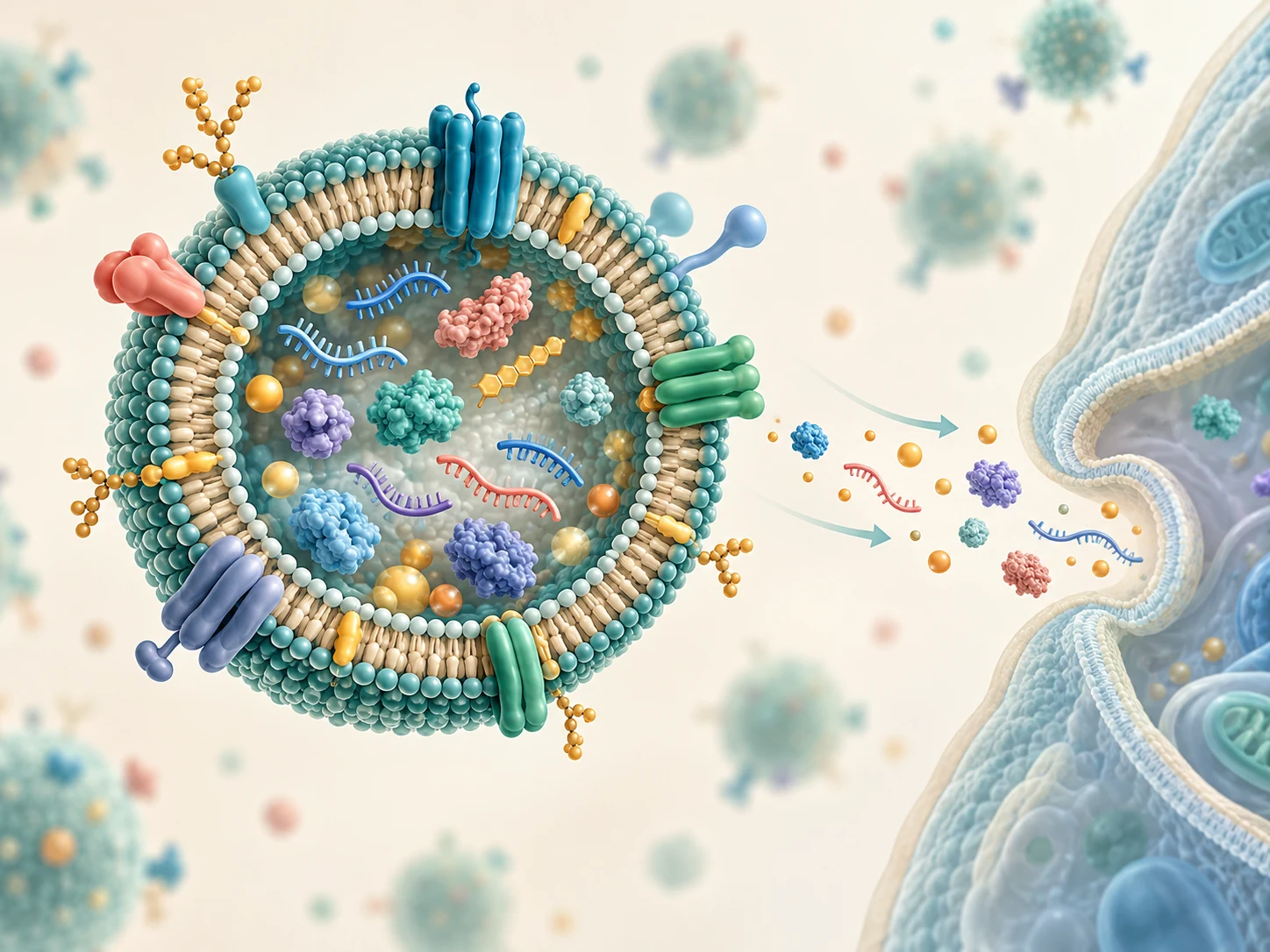
Exosomes are one category of small extracellular vesicles released by cells. They may carry proteins, lipids, and nucleic acids and are studied for their roles in cell-to-cell communication.
- Exosomes are not living stem cells.
- Exosomes are not interchangeable with platelet-rich plasma.
- Preparations may differ in source, composition, manufacturing, and properties.
- Findings from one product cannot automatically be applied to another.
Follicle biology
Understanding Hair Growth and Hair Loss
Hair follicles move through repeating phases. Genetics, hormones, health conditions, medications, nutrition, inflammation, and other factors can influence shedding and follicle behavior.
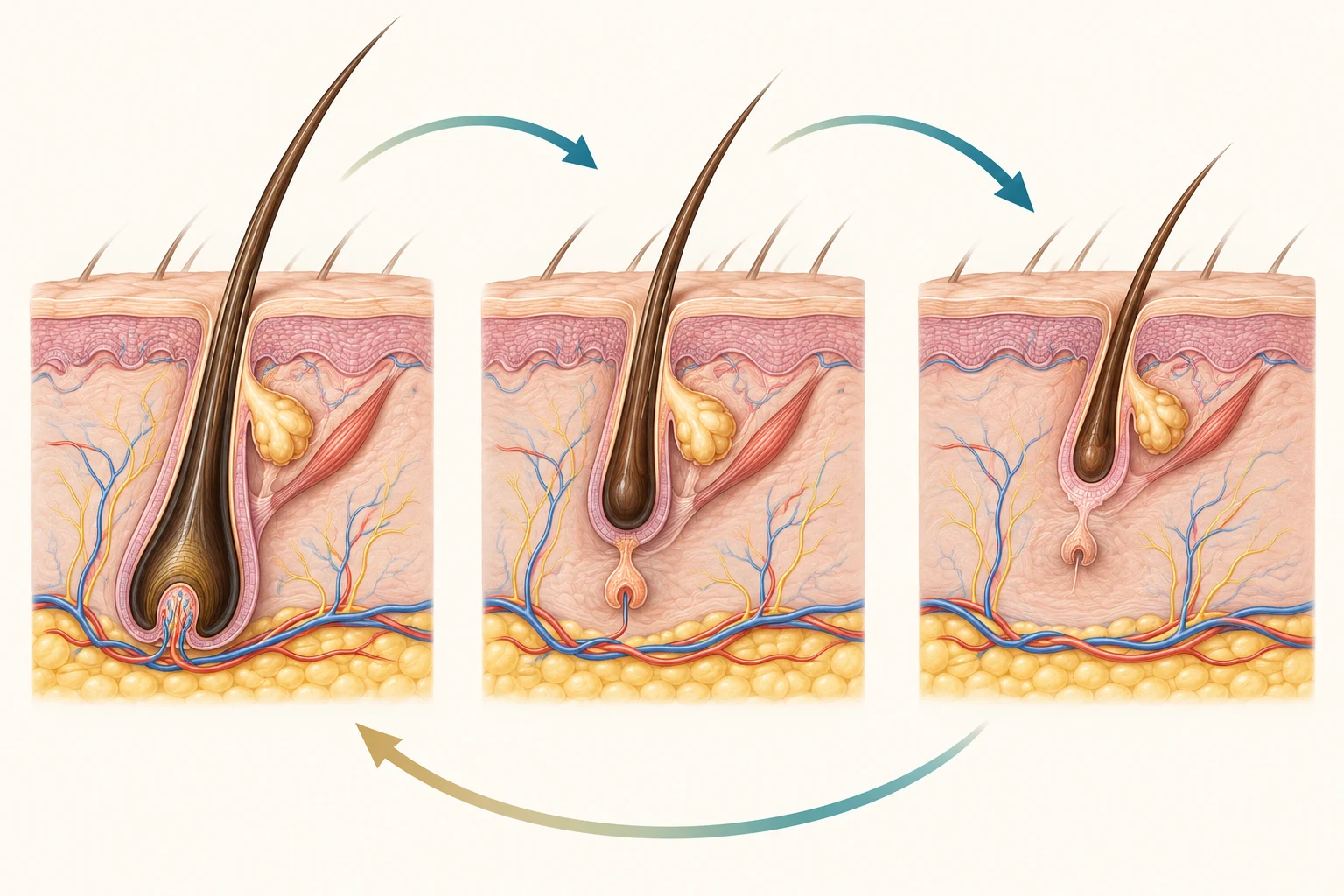
This biological cycle does not establish that an investigational exosome product can restart dormant follicles or reverse genetic hair loss.
State of the evidence
Exosomes in Hair Restoration Research
Laboratory Research
Scientists are investigating extracellular-vesicle signaling and its relationship to hair-follicle biology.
Early Clinical Research
Small and heterogeneous studies have explored extracellular-vesicle preparations for hair-loss applications.
Current Limitations
Clinical evidence is insufficient to establish standardized effectiveness, long-term safety, optimal dosing, or treatment protocols.
Research findings are preliminary and do not establish exosome-based hair treatment as an FDA-approved or proven therapy.
Diagnosis before treatment
A Personalized Approach to Hair-Loss Evaluation
- 1
Medical History
Review health conditions, medications, family history, and symptoms.
- 2
Scalp Examination
Evaluate the hair-loss pattern and scalp condition.
- 3
Diagnostic Testing
Consider laboratory testing or specialist evaluation when clinically indicated.
- 4
Treatment Planning
Discuss appropriate evidence-based treatment options.
Patient safety
Safety, Product Quality & Regulatory Status
There are currently no FDA-approved exosome products. Preparations can vary in source, manufacturing, purity, and composition. Potential concerns include contamination, infection, immune reactions, and unknown long-term effects.
Clinical use of investigational products requires careful regulatory and medical consideration. Patients should discuss evidence-based alternatives with their clinician and should not interpret this educational page as an offer or recommendation for exosome administration.
Patient questions
Frequently Asked Questions
What are exosomes?
Exosomes are a category of small extracellular vesicles released by cells. They may carry proteins, lipids, and nucleic acids involved in cell-to-cell signaling.
Are exosomes the same as stem cells?
No. Exosomes are not cells and cannot reproduce. They are vesicles released by cells and may contain molecular cargo.
Are exosome treatments FDA-approved for hair loss?
No. The FDA states that there are currently no FDA-approved exosome products, including for hair loss.
Can exosomes regrow hair?
It has not been established that exosome products reliably regrow hair. Research is preliminary, and findings cannot be generalized across different preparations.
How are exosomes different from PRP?
PRP is prepared from a patient's own blood and contains platelets and plasma. Exosome preparations are extracellular-vesicle products that may come from different sources and are not interchangeable with PRP.
What are the potential risks?
Potential concerns include contamination, infection, immune reactions, variable product quality, and unknown long-term effects. Risk depends on the product and route of use.
What treatments are available for hair thinning?
Depending on the diagnosis, options may include approved medications, PRP, management of contributing medical factors, procedural or surgical approaches, or specialist referral.
How is the cause of hair loss evaluated?
Evaluation may include medical and family history, medication review, scalp examination, laboratory testing when indicated, and referral for specialized assessment.
Personalized medical guidance
Concerned About Hair Thinning or Hair Loss?
Schedule a personalized consultation with Dr. Yanitza Rodriguez to discuss possible causes of hair loss and available treatment options.