
Reproductive Hormones
Testosterone, estradiol, progesterone, luteinizing hormone (LH), follicle-stimulating hormone (FSH), prolactin, or sex hormone-binding globulin (SHBG).
Precision Testing. Personalized Interpretation. Better-Informed Care.
Understanding your hormonal health begins with the right evaluation. Our physician-guided approach uses targeted laboratory testing and clinical interpretation based on your symptoms, medical history, medications, and individual health needs.
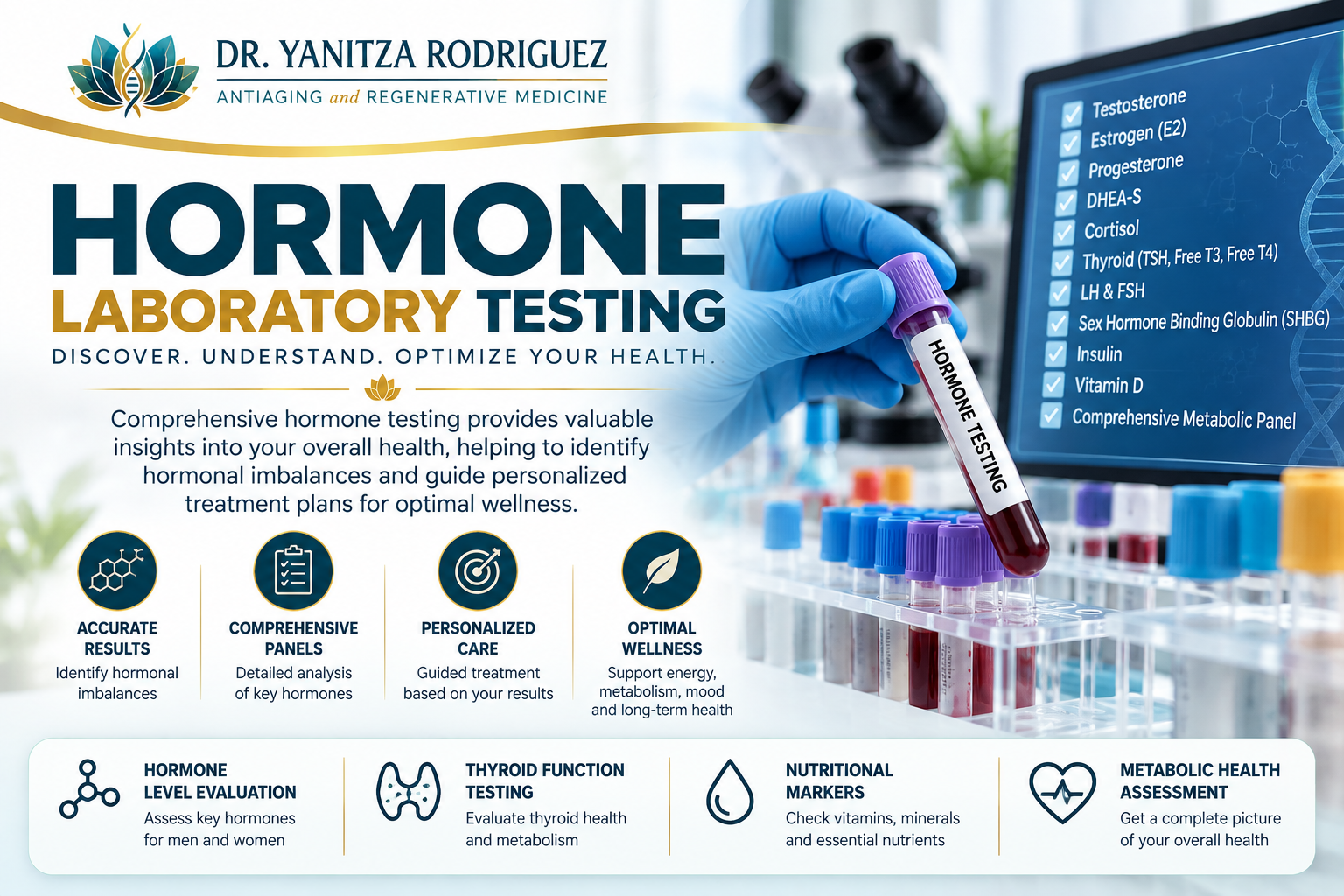
Hormone testing measures selected hormones or related markers in blood, urine, or another specimen. The results can help investigate symptoms, confirm or exclude certain endocrine conditions, establish a baseline before treatment, and monitor a prescribed therapy.
A laboratory value is one piece of a medical evaluation—not a diagnosis by itself. Results must be interpreted alongside symptoms, physical findings, age, sex, menstrual or reproductive status, collection time, medications, supplements, health conditions, and the laboratory’s reference interval.
There is no single “complete hormone panel” that is appropriate for everyone. Tests are selected according to the clinical question. Depending on the evaluation, orders may include:
Testosterone, estradiol, progesterone, luteinizing hormone (LH), follicle-stimulating hormone (FSH), prolactin, or sex hormone-binding globulin (SHBG).
Commonly TSH and free T4, with free T3 or thyroid antibodies in selected circumstances.
Cortisol, ACTH, DHEA-S, IGF-1, or other focused studies when clinically indicated.
Blood count, metabolic panel, glucose or A1C, lipids, iron studies, Vitamin B12, Vitamin D, or other tests based on symptoms and treatment safety.
Symptoms such as fatigue, weight changes, poor sleep, and mood changes can have many causes. Laboratory testing should be guided by an appropriate medical evaluation.
Evaluation may be appropriate for menstrual changes, hot flashes, infertility concerns, low libido, sexual dysfunction, signs of androgen excess, unexplained breast changes, suspected thyroid disease, abnormal growth or puberty, possible pituitary or adrenal disease, or symptoms suggesting testosterone deficiency.
Common symptoms such as fatigue, weight change, poor sleep, hair loss, mood changes, and difficulty concentrating are nonspecific. Testing should also consider nonhormonal causes rather than assuming a “hormone imbalance.”
Review symptoms, health history, medications, and relevant concerns.
Select laboratory studies based on the clinical question.
Interpret findings alongside the patient's health history and examination.
Discuss appropriate next steps, additional evaluation, or treatment when indicated.
Most evaluations use blood; urine, saliva, or specialized dynamic tests may be appropriate for selected conditions.
Some hormone levels change by time of day, menstrual-cycle phase, pregnancy status, recent illness, sleep, stress, nutrition, and medication use. Testosterone in men is generally confirmed using separate early-morning measurements. Cortisol testing must match the specific clinical question and may require a particular collection time or method.
Do not stop prescription medicines or supplements unless instructed. Tell the clinician about hormones, steroids, thyroid medicine, biotin, fertility medicines, supplements, and the exact timing of the last dose because they can alter results or interfere with some assays.
Fasting, menstrual-cycle timing, and other preparation depend on the specific tests ordered. Follow the instructions provided with your laboratory order, and ask your clinician if anything is unclear.
Do not stop prescribed medications unless instructed by your healthcare professional.
A result outside the reference interval does not always indicate disease, and a result inside the interval does not always exclude it. Reference ranges can differ by laboratory, method, age, sex, and physiologic state. Borderline or unexpected findings may need repeat testing under standardized conditions.
Patterns are often more informative than one number. For example, testosterone may be interpreted with LH, FSH, or SHBG; thyroid hormones with TSH; and cortisol with collection time and sometimes ACTH or a stimulation or suppression test.
Baseline tests may help confirm an indication and identify safety concerns before hormone therapy. Follow-up testing can assess whether medication levels are appropriate and monitor treatment-specific risks, such as hematocrit during testosterone therapy or thyroid levels after a dose change.
Testing frequency depends on the diagnosis, medicine, formulation, dose, response, pregnancy potential, and other health conditions. Results should guide a clinical conversation—not automatic prescribing or dose escalation.
Ordering many tests without a focused question increases the chance of incidental results, unnecessary repeat testing, anxiety, and treatment that may not help. Saliva, urine, dried-blood-spot, and at-home tests have legitimate uses in specific settings, but they are not interchangeable with validated serum testing for every condition.
Personalized care means choosing the right test, collected at the right time, and interpreting it in context—not simply ordering the largest panel.
No. The image shows examples. Your clinician should select only tests that address your symptoms, diagnosis, medication monitoring, or preventive-care needs.
It depends on the ordered tests. Some hormone measurements and related metabolic tests may be collected fasting or at a specific time. Follow the instructions provided with your order.
Not always. Normal biologic variation, illness, collection timing, and assay interference can affect results. Repeat or confirmatory testing may be needed before diagnosis or treatment.
Results should be reviewed with the ordering clinician, who can explain the reference interval, clinical significance, whether follow-up is needed, and how the findings relate to your symptoms.
Serving Boynton Beach, Loxahatchee, West Palm Beach, Wellington, Royal Palm Beach, Lake Worth, Delray Beach, and nearby communities.
Schedule a physician-guided evaluation to discuss your symptoms and determine which laboratory tests may be appropriate for you.
Medical disclaimer: The infographic is educational and lists examples rather than a recommended panel for every patient. Laboratory tests cannot diagnose or “optimize” health in isolation. Test selection, preparation, interpretation, and treatment decisions require individualized clinical evaluation.