What Are Vitamin D Injections?
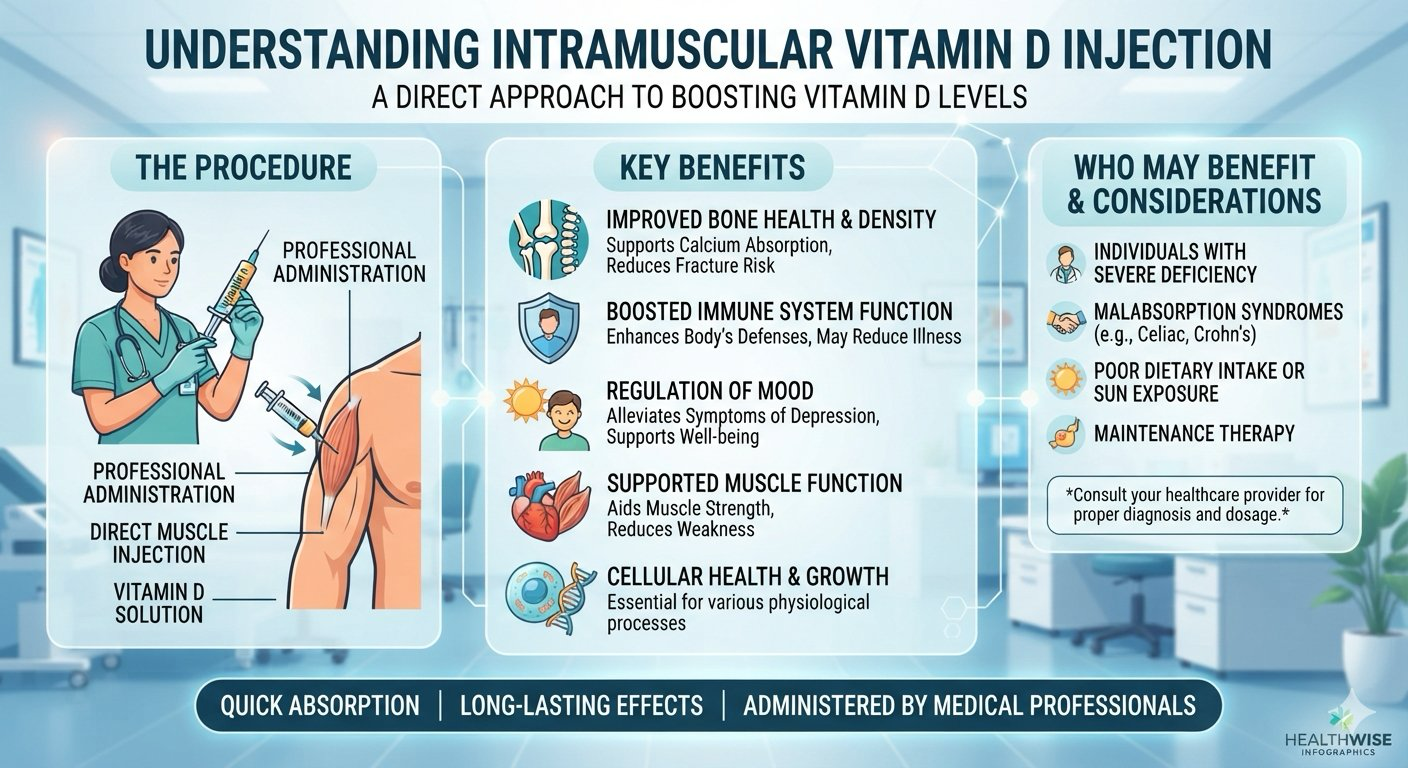
A Vitamin D injection delivers a prescribed dose into a muscle, usually by a trained medical professional. The injected Vitamin D is absorbed from the muscle over time and does not rely on absorption through the digestive tract.
Oral Vitamin D is appropriate for many patients. An injection may be considered when a clinician identifies severe deficiency, malabsorption, difficulty adhering to oral treatment, or another specific reason.
Why Vitamin D Matters
- Calcium absorption and bone health: Vitamin D helps the intestine absorb calcium and supports normal bone mineralization and remodeling.
- Muscle function: Vitamin D is involved in normal muscle development and function. Deficiency can contribute to weakness, pain, and osteomalacia.
- Cellular function: Vitamin D receptors are present in many tissues, and the nutrient participates in normal physiological processes.
- Immune function: Vitamin D has recognized roles in immune biology, but injections are not proven to prevent infections or broadly “boost” immunity in people without deficiency.
- Mood: Low Vitamin D and depression can occur together, but supplementation is not an established stand-alone treatment for depression.
Who May Be Considered?
Potential candidates include adults with a laboratory-confirmed deficiency, limited sun exposure or dietary intake, certain fat-malabsorption conditions, or a history of bariatric surgery. Celiac disease, Crohn’s disease, ulcerative colitis, cystic fibrosis, and some liver diseases can interfere with Vitamin D absorption.
These risk factors do not automatically mean an injection is needed. The treatment route, dose, and schedule depend on laboratory results, health history, and response to prior therapy.
Testing and Medical Evaluation
A serum 25-hydroxyvitamin D blood test is commonly used to assess Vitamin D status when testing is clinically appropriate. The medical team may also review:
- Diet, sun exposure, symptoms, and previous supplementation
- Kidney, liver, parathyroid, gastrointestinal, and bone conditions
- Calcium levels and other laboratory findings when indicated
- Prescription medicines and supplements that can affect Vitamin D or calcium
- Pregnancy status and history of kidney stones
- Whether oral supplementation is a suitable first option
Safety and Excess Vitamin D
Vitamin D is fat soluble and can accumulate. Excessive dosing can cause high calcium levels, nausea, vomiting, poor appetite, excessive thirst or urination, dehydration, weakness, confusion, kidney stones, kidney injury, and abnormal heart rhythm.
Seek prompt medical advice for concerning symptoms after treatment. Severe confusion, fainting, chest symptoms, or signs of a serious allergic reaction require emergency care.
What to Expect
Your visit begins with a consultation, medication review, and assessment of relevant laboratory results. If an injection is appropriate, a medical professional administers the prescribed Vitamin D dose into a muscle using sterile technique.
The schedule and follow-up testing are individualized. “Quick absorption” and “long-lasting effects” do not mean immediate symptom relief or that one injection is sufficient for everyone.
After the Injection
Mild soreness, redness, or tenderness can occur at the injection site. Follow the prescribed plan, avoid adding high-dose Vitamin D or calcium without approval, and complete follow-up blood testing when requested.
Correcting a deficiency can take time. Improvement and maintenance needs vary, and treatment does not guarantee changes in mood, immunity, strength, or fracture risk.