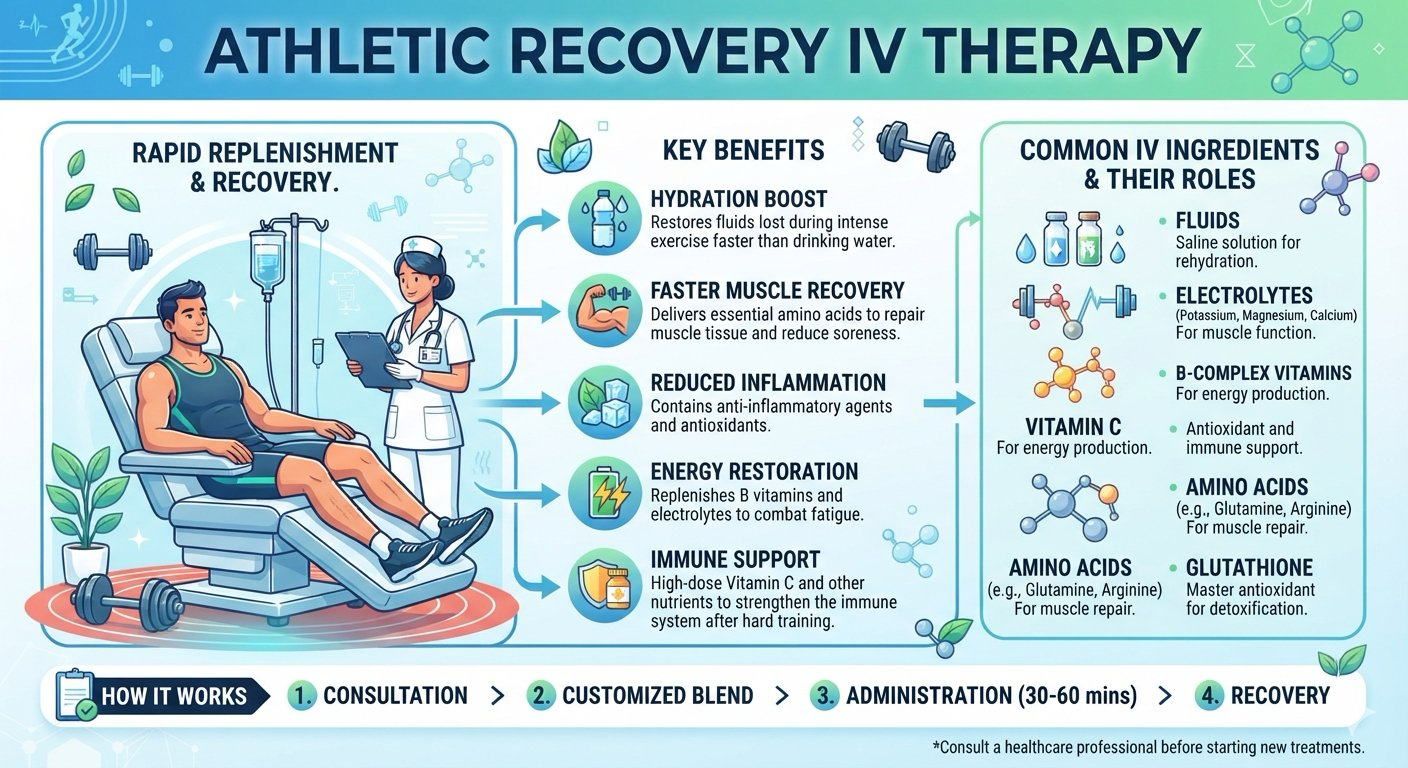
An individualized option for hydration, electrolyte replacement, and selected nutrient support after demanding exercise—guided by medical screening and your recovery needs.
Athletic recovery IV therapy delivers fluids and provider-selected ingredients directly into the bloodstream. It may be considered when an athlete cannot adequately replace fluids orally or when a clinical assessment identifies a specific need.
It is supportive care—not a shortcut to fitness, a performance enhancer, or a replacement for sleep, balanced nutrition, appropriate training, and injury care.
Potential Areas of Support
Hydration: IV fluids may help replace fluid when oral hydration is inadequate. Most people with mild exercise-related fluid loss can rehydrate by mouth.
Electrolytes: Potassium, magnesium, calcium, or other electrolytes may be considered only when clinically appropriate. Incorrect amounts can be harmful.
Selected vitamins: B-complex vitamins and vitamin C have normal roles in metabolism and cell function, but extra amounts do not guarantee more energy, stronger immunity, or faster recovery.
Amino acids: Ingredients such as glutamine or arginine may be discussed, but evidence does not establish that an IV blend accelerates muscle repair or improves athletic performance.
Antioxidant support: Glutathione may be offered in selected cases. It should not be described as a proven detoxification treatment or a guaranteed way to reduce exercise-related inflammation.
Recovery Fundamentals Still Matter Most
A nutritionally adequate diet and sufficient hydration are central to exercise performance and recovery. Adequate sleep, protein and carbohydrate intake, planned rest, gradual training progression, and treatment of injuries remain the foundation.
IV therapy does not replace these measures and cannot guarantee less soreness, reduced inflammation, faster tissue repair, improved endurance, or enhanced performance.
A Medical Evaluation Comes First
The medical team may review:
Training intensity, heat exposure, fluid intake, and recent weight change
Symptoms, vital signs, hydration status, and urine output
Kidney, heart, liver, blood-pressure, and electrolyte conditions
Prescription medicines, supplements, allergies, and pregnancy status
Whether laboratory testing or injury evaluation is appropriate
Whether oral hydration, rest, physical therapy, urgent care, or emergency care is the safer choice
Know the Warning Signs
Seek immediate medical care for muscle pain or cramping that is far more severe than expected, dark tea- or cola-colored urine, unusual weakness, or marked exercise intolerance. These can be warning signs of rhabdomyolysis.
Chest pain, trouble breathing, fainting, confusion, severe heat illness, inability to keep fluids down, very little urination, or a suspected serious injury also require urgent or emergency evaluation—not a wellness infusion.
What to Expect
Your visit begins with a consultation and screening. If treatment is appropriate, the clinician selects the fluid volume, ingredients, dose, infusion rate, and monitoring plan. Formulas are not one-size-fits-all, and not every ingredient shown in the infographic is appropriate for every patient.
Administration time and response vary. The team reassesses symptoms and provides individualized aftercare guidance before you leave.
After the Infusion
Continue oral hydration and balanced nutrition as directed. Return to exercise gradually, respect pain and fatigue signals, and follow any injury or rehabilitation plan. Seek care if symptoms worsen, recur, or do not improve as expected.
Frequently Asked Questions
Important information about IV support after exercise.
Is IV hydration better than drinking fluids?
Not routinely. Oral fluids are appropriate for many healthy adults with mild fluid loss. IV fluids may be considered when oral intake is inadequate or a clinician identifies a medical need.
Will it speed muscle recovery?
No specific result can be promised. Evidence does not establish that a customized IV nutrient blend speeds muscle repair or improves performance in otherwise well-nourished athletes.
Is every ingredient included?
No. Ingredients and doses are selected only after screening. Kidney function, heart conditions, medications, allergies, and electrolyte status can change what is safe.
How long does treatment take?
Timing depends on the prescribed volume, ingredients, infusion rate, and your response. A 30–60 minute treatment or recovery time cannot be guaranteed.
Can this treat a sports injury or overtraining?
No. Pain, swelling, weakness, reduced function, or persistent fatigue may require injury assessment, laboratory testing, rehabilitation, rest, or other treatment. IV therapy should not delay appropriate care.
Athletic Recovery IV Therapy in Palm Beach County
Visit Yanitza Rodriguez MD PA in Boynton Beach or Loxahatchee.
Boynton Beach
2623 S Seacrest Blvd, Suite 213 Boynton Beach, FL 33435
Our medical team can review your training demands, symptoms, hydration status, and health history to determine whether IV support or another approach is appropriate.
Medical disclaimer: Athletic recovery IV therapy is supportive care. It is not intended to diagnose or treat a sports injury, rhabdomyolysis, heat illness, or another emergency, and it does not guarantee faster recovery or improved performance. Individual responses vary, and medical evaluation is required before treatment.