What Is Glutathione Infusion Therapy?
Glutathione is a naturally occurring molecule made from the amino acids cysteine, glutamate, and glycine. Inside cells, it participates in antioxidant defense, redox balance, and enzyme-supported processing of certain compounds.
Glutathione infusion therapy delivers a prepared solution intravenously. This route requires pharmaceutical-quality ingredients suitable for injection, sterile preparation, medical supervision, and monitoring for infusion-related reactions.
Glutathione’s Biological Roles
- Antioxidant defense: Glutathione helps cells manage reactive oxygen species and participates in recycling certain antioxidants.
- Cellular redox balance: The reduced and oxidized forms of glutathione are part of systems that help maintain the cellular environment.
- Liver pathways: Glutathione participates in enzyme-mediated conjugation and processing of some compounds. This does not mean an infusion broadly removes unspecified “toxins” or replaces liver or kidney function.
- Immune biology: Glutathione is involved in normal immune-cell processes, but IV therapy is not proven to prevent infection or generally “boost” immunity.
What the Evidence Does—and Does Not—Show
Although glutathione has important biological functions, that fact alone does not establish that elective IV infusions improve longevity, brain health, fatigue, recovery, liver function, immunity, or general wellness. Evidence for many promoted uses remains limited, condition-specific, or investigational.
IV glutathione should not be presented as a proven anti-aging treatment, detoxification program, cancer treatment, or substitute for evidence-based care.
Medical Evaluation and Product Review
The medical team may review:
- The specific symptom or treatment goal and whether another diagnosis needs evaluation
- Kidney, liver, heart, lung, and immune-system conditions
- Pregnancy, allergies, asthma, medications, supplements, and prior infusion reactions
- Whether laboratory testing or specialist care is appropriate
- The source, concentration, sterility, storage, and intended injectable quality of every ingredient
- Whether the expected benefit justifies IV-access and infusion risks
Safety and Injectable Quality Matter
IV therapy carries risks including pain, bruising, infection, vein inflammation, fluid-related complications, and allergic or infusion reactions. Glutathione products prepared for injection must not be made from dietary-supplement-grade ingredients.
In August 2026, the FDA reported adverse events in at least 30 patients following IV glutathione made with an inappropriate dietary-supplement-grade ingredient; reported effects included fever, chills, pain, dizziness, shock-like or sepsis-like symptoms, and hospitalizations. Product sourcing and sterile-compounding controls are essential.
Frequency Must Be Individualized
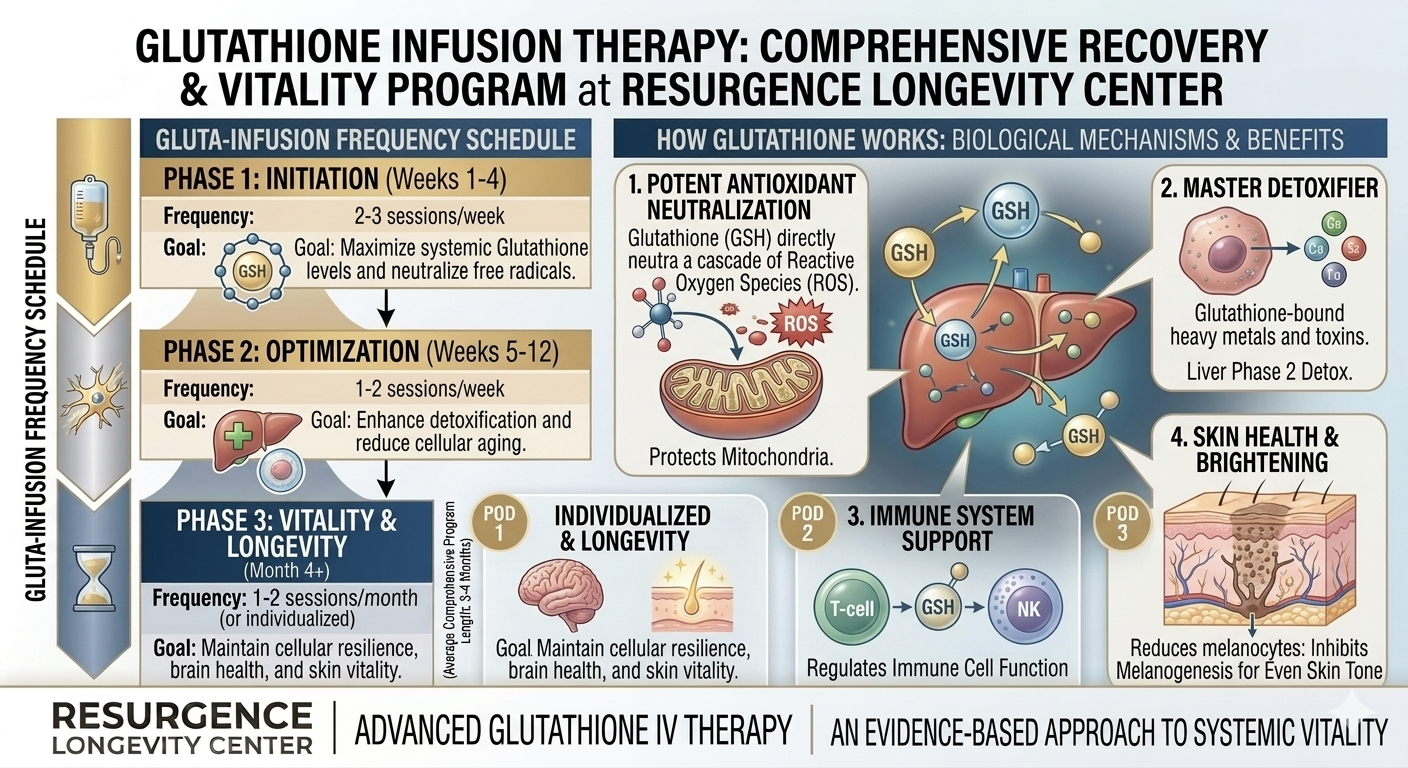
The infographic shows a three-phase example ranging from multiple weekly sessions to monthly maintenance. It is not a universal or evidence-established schedule and should not be followed automatically.
If treatment is considered, dose, infusion rate, frequency, duration, monitoring, and stopping criteria must be individualized. No course can guarantee higher tissue glutathione, reduced cellular aging, improved cognition, or sustained vitality.
Skin Brightening Is Not an Established IV Use
Evidence for IV glutathione as a skin-lightening or brightening treatment is inadequate, and long-term safety data are lacking. Reviews advise against IV use for this cosmetic purpose because benefit is uncertain and parenteral risks can be significant.
Changes in pigmentation should be evaluated by a qualified clinician. Evidence-based sun protection and dermatologic treatments may be safer and more appropriate.