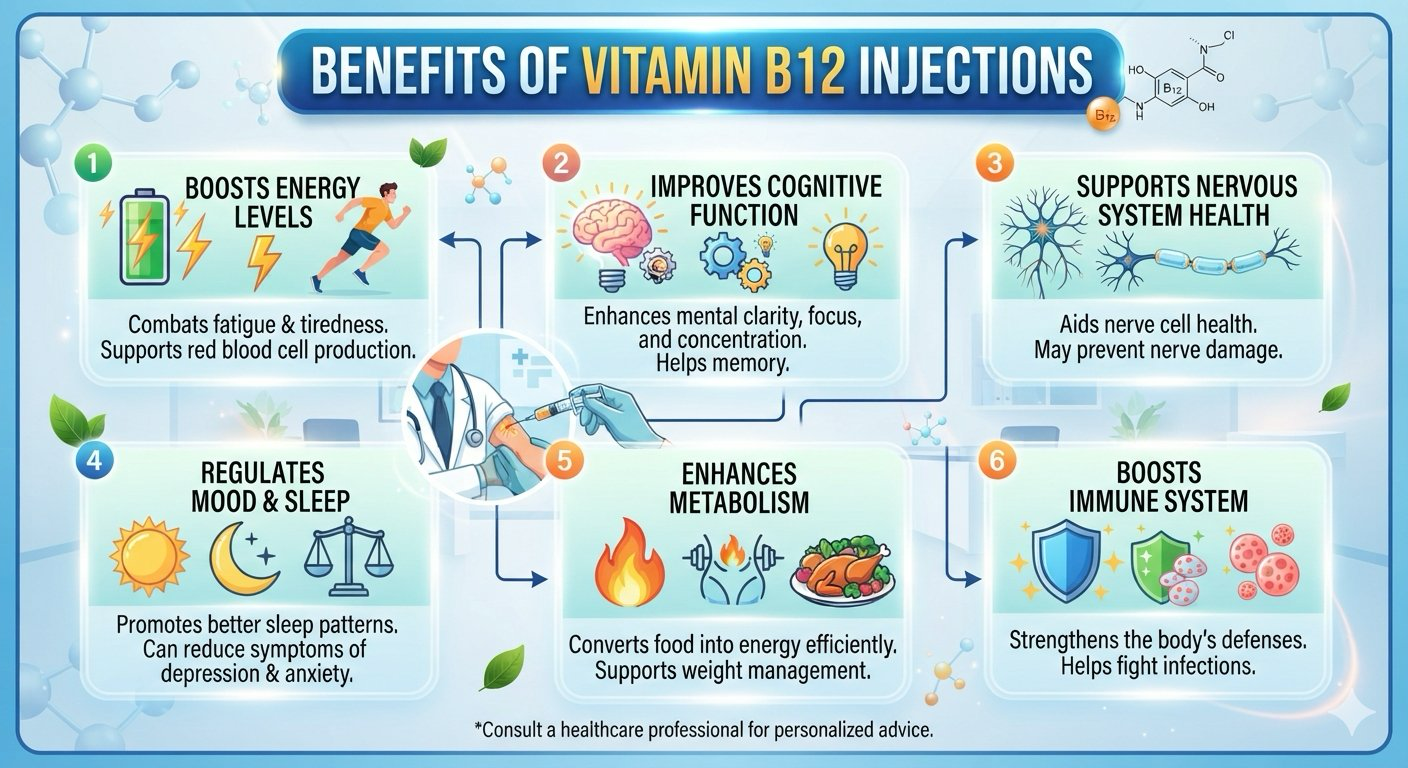
What Are Vitamin B12 Injections?
Vitamin B12 injections deliver a prescribed form of cobalamin into a muscle or, for some products and indications, beneath the skin. They bypass the digestive tract and are commonly used when a patient cannot absorb enough B12 or needs clinically directed replacement.
Common injectable forms include cyanocobalamin and hydroxocobalamin. Product selection, route, dose, and schedule depend on the diagnosis, medical history, and response to treatment.
Why Vitamin B12 Matters
- Red-blood-cell formation: B12 is required for normal blood-cell development. Deficiency can cause megaloblastic anemia, fatigue, weakness, paleness, and palpitations.
- Nervous-system health: B12 supports normal nerve function. Deficiency can cause numbness, tingling, balance problems, cognitive changes, and potentially irreversible nerve injury—even without anemia.
- DNA and cellular metabolism: B12 is involved in DNA synthesis and metabolic reactions needed for normal cellular function.
- Energy symptoms: Correcting B12 deficiency may improve deficiency-related fatigue. B12 does not act as a stimulant and does not enhance energy or athletic performance in people with adequate status.
Who May Be Considered?
Injection therapy may be considered for people with confirmed deficiency, pernicious anemia, gastrointestinal surgery or disease that impairs absorption, or medication-related risk. Long-term metformin and acid-suppressing medicines can contribute to lower B12 status in some patients.
People following vegan diets and some older adults are also at increased risk, but oral or sublingual B12 may be effective. An injection is not automatically necessary solely because a person has fatigue or follows a particular diet.
Testing and Diagnosis
Fatigue, memory concerns, numbness, sleep problems, mood symptoms, and anemia have many potential causes. Evaluation may include:
- Symptoms, diet, medications, and prior supplements or injections
- Gastrointestinal surgery, pernicious anemia, Crohn’s disease, celiac disease, and other absorption risks
- Complete blood count, serum B12, methylmalonic acid, folate, homocysteine, or other tests when appropriate
- Neurologic examination when numbness, tingling, weakness, balance, or cognitive symptoms are present
- Whether oral B12 is an effective and preferable treatment option
Safety and Possible Side Effects
Possible effects include injection-site pain, redness, swelling, itching, diarrhea, or a sensation of swelling. Tell the clinician about allergies, kidney disease, low potassium, pregnancy, and all medicines and supplements.
Seek emergency care for hives, trouble breathing, facial or throat swelling, fainting, chest symptoms, or another sign of a severe reaction. New or worsening neurologic symptoms also require prompt evaluation.
What to Expect
Your visit begins with a consultation, medication review, and assessment of relevant laboratory findings. If treatment is appropriate, the clinician confirms the B12 product, dose, route, and schedule before administration using sterile technique.
Some deficiency regimens begin with more frequent doses and transition to maintenance treatment. The schedule varies by cause, severity, product, response, and whether the underlying absorption problem is permanent.
What B12 Does Not Guarantee
In people without deficiency, B12 supplementation has not been shown to improve endurance or reliably enhance energy, cognition, memory, mood, sleep, immune defenses, metabolism, or weight loss.
Correcting deficiency is important, but persistent symptoms require evaluation rather than repeated injections without a diagnosis.