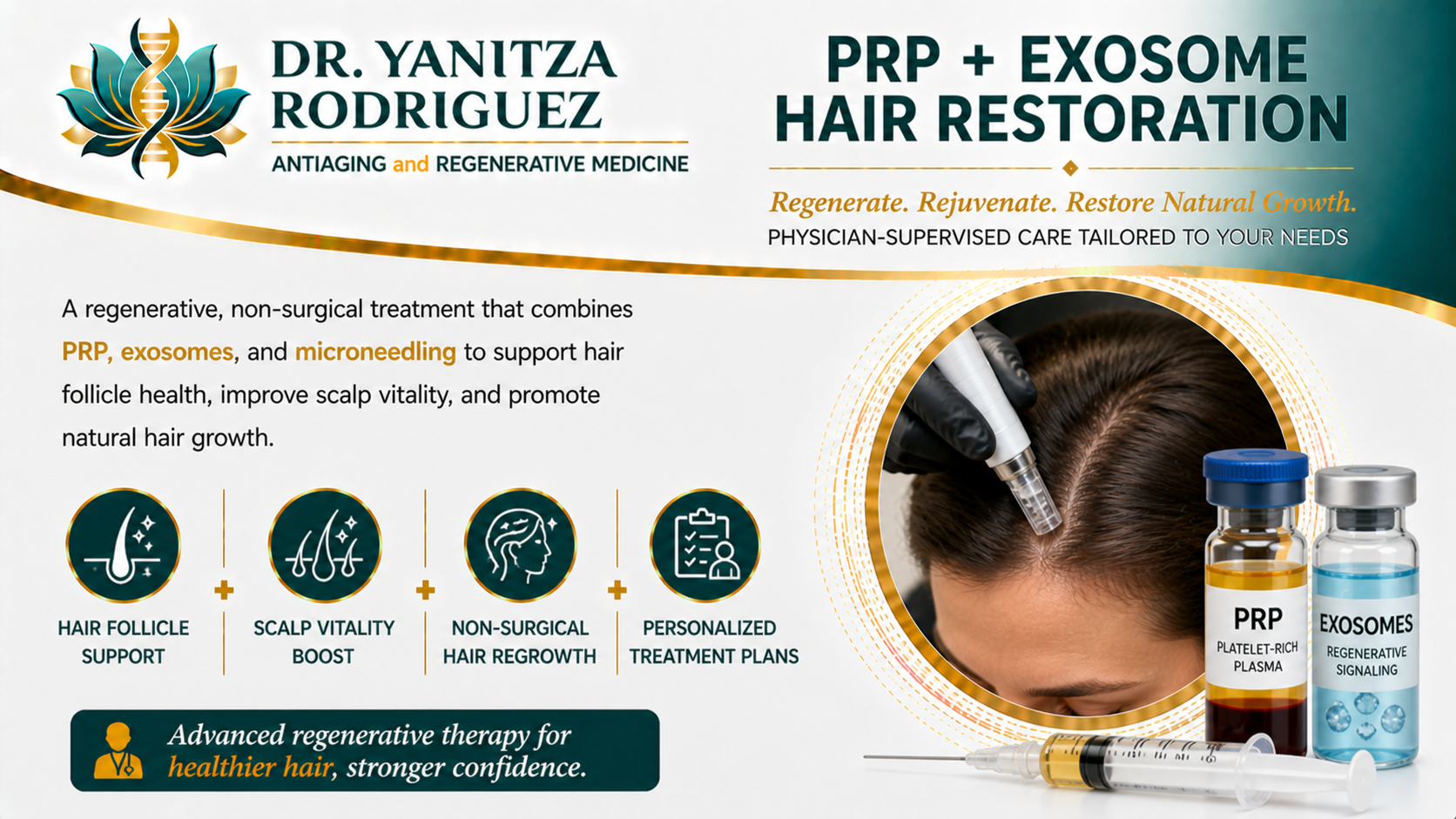
How Does PRP Work for Hair Loss?
PRP contains at least six different growth factors, In addition, PRP contains at least 30 other substances, including chemokines, clotting factors, and immune mediators, all or some of which may influence hair growth as well. Growth factors can increase the duration of the anagen, the growth phase of hair, and may increase the thickness of the hair shaft.
PRP Treatment Process
A PRP visit begins with a clear explanation of the procedure and the signing of an informed consent form. This signifies that the patient understands the risks, benefits, limitations, and alternatives to the procedure.
Next, a quantity of blood will be drawn, the exact amount being dependent on the system used by the office. While the PRP is prepared, the patient will generally be moved to a treatment room, where local anesthesia will be administered if appropriate.
The blood sample will be processed according to the protocol specific to the system used, which may involve a single or double spin, and transferred to test tubes or separation containers. When concluded, there will be three products: packed red blood cells, platelet-poor plasma (PPP), and platelet-rich plasma (PRP).
Sometimes, but not always, a small sample will be tested to determine the exact concentration of platelets. The goal is to concentrate the platelet level 2-6 times higher than the starting level. There is no consensus on the ideal concentration.
In some offices, the PRP will be injected as is, while other offices may add a porcine-based extracellular matrix as a stabilizer. This is done to stabilize the PRP proteins and enhance the results. Generally, at least 6 ml of PRP will be available to inject.
PRP is often administered along with microneedling, another method of stimulating growth factor release. If so, an anesthetic ring block may be administered, or nitrous oxide gas may be administered, to reduce any pain. The PRP is injected in small quantities of as little as 0.05 ml, allowing as many as 120 injection sites per procedure. Microneedling will generally follow the PRP injections, if they are administered.
Required Number of Sessions
PRP treatments will always need to be repeated to be effective. However, there is no standard treatment interval. A common program is one treatment session each month for three months, followed by a booster session every six months. Your practitioner will discuss your recommended treatment program and its rationale.