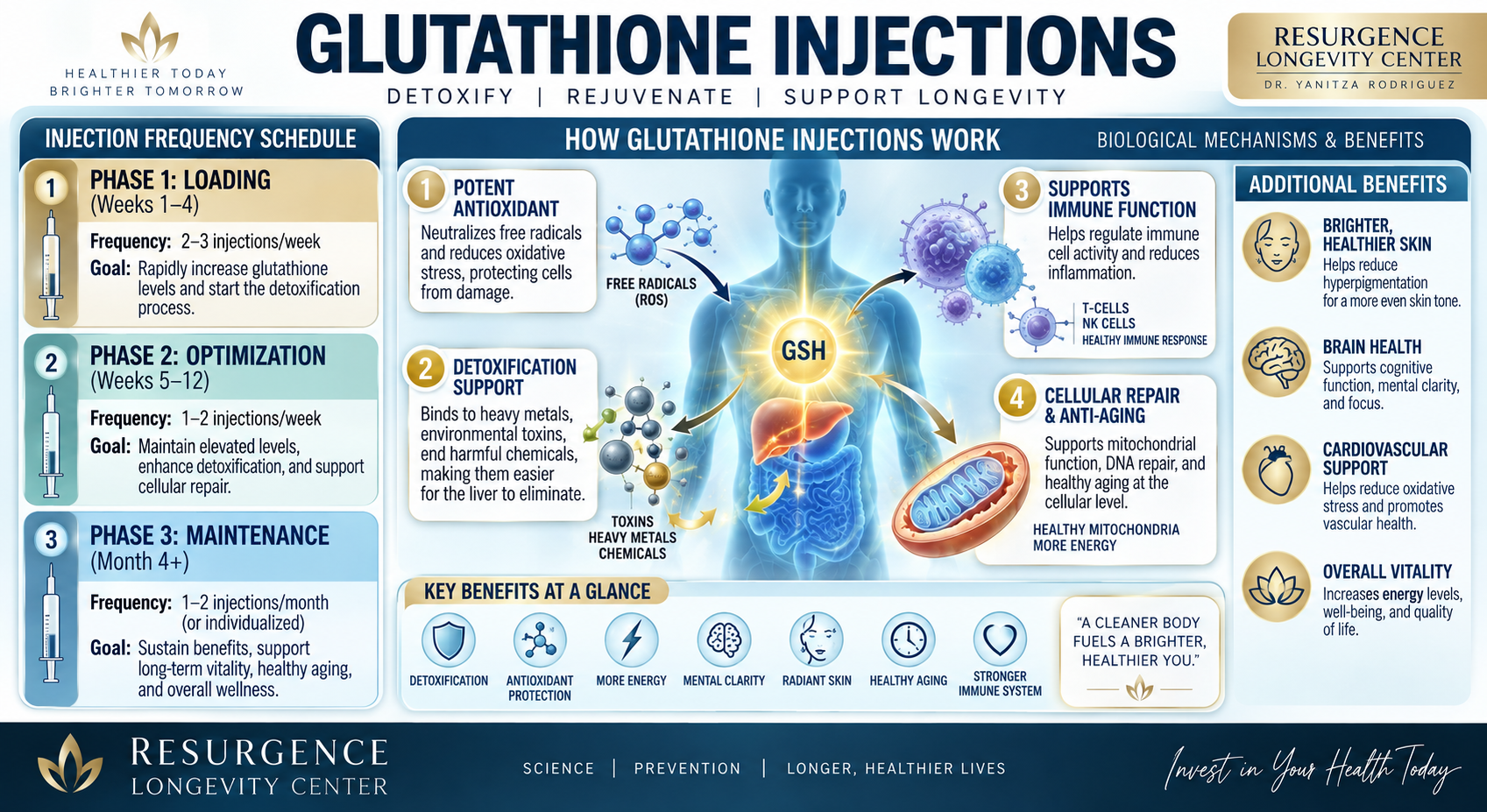
What Are Glutathione Injections?
Glutathione is a naturally occurring molecule made from the amino acids cysteine, glutamate, and glycine. Inside cells, it participates in antioxidant defense, redox balance, and enzyme-supported processing of certain compounds.
“Glutathione injection” can refer to more than one parenteral route. The product label, prescription, concentration, and intended route—such as intramuscular or intravenous—must be confirmed before administration. Products and routes are not automatically interchangeable.
Glutathione’s Biological Roles
- Antioxidant defense: Glutathione helps cells manage reactive oxygen species and participates in recycling certain antioxidants.
- Cellular redox balance: The reduced and oxidized forms of glutathione are part of systems that help maintain the cellular environment.
- Liver pathways: Glutathione participates in enzyme-mediated conjugation and processing of some compounds. This does not mean an injection broadly removes unspecified “toxins” or replaces liver or kidney function.
- Immune biology: Glutathione is involved in normal immune-cell processes, but injection therapy is not proven to prevent infection or generally “boost” immunity.
What the Evidence Does—and Does Not—Show
Although glutathione has important biological functions, that fact alone does not establish that elective injections improve longevity, brain health, fatigue, recovery, cardiovascular health, immunity, or general wellness. Evidence for many promoted uses remains limited, condition-specific, or investigational.
Glutathione injections should not be presented as a proven anti-aging treatment, detoxification program, cancer treatment, or substitute for evidence-based care.
Medical Evaluation and Product Review
The medical team may review:
- The specific symptom or treatment goal and whether another diagnosis needs evaluation
- Kidney, liver, heart, lung, and immune-system conditions
- Pregnancy, allergies, asthma, medications, supplements, and prior injection reactions
- Whether laboratory testing or specialist care is appropriate
- The source, concentration, sterility, storage, and labeled route of every injectable ingredient
- Whether the expected benefit justifies injection-related and systemic risks
Safety and Injectable Quality Matter
Injection therapy carries risks including pain, bruising, bleeding, infection, tissue irritation, nerve or vessel injury, and allergic or systemic reactions. Glutathione products prepared for injection must not be made from dietary-supplement-grade ingredients.
In August 2026, the FDA reported adverse events in at least 30 patients following IV glutathione made with an inappropriate dietary-supplement-grade ingredient; reported effects included fever, chills, pain, dizziness, shock-like or sepsis-like symptoms, and hospitalizations. The incident involved IV use, but it underscores the importance of pharmaceutical-quality source material and sterile preparation for every injectable route.
Frequency Must Be Individualized
The infographic shows a three-phase example ranging from multiple weekly injections to monthly maintenance. It is not a universal or evidence-established schedule and should not be followed automatically.
If treatment is considered, product, route, dose, frequency, duration, monitoring, and stopping criteria must be individualized. No course can guarantee higher tissue glutathione, reduced cellular aging, improved cognition, or sustained vitality.
Skin Brightening Is Not an Established Injectable Use
Evidence for parenteral glutathione as a skin-lightening or brightening treatment is inadequate, and long-term safety data are lacking. Reviews advise against IV use for this cosmetic purpose, and another injectable route should not be assumed effective or safe without supporting evidence.
Changes in pigmentation should be evaluated by a qualified clinician. Evidence-based sun protection and dermatologic treatments may be safer and more appropriate.