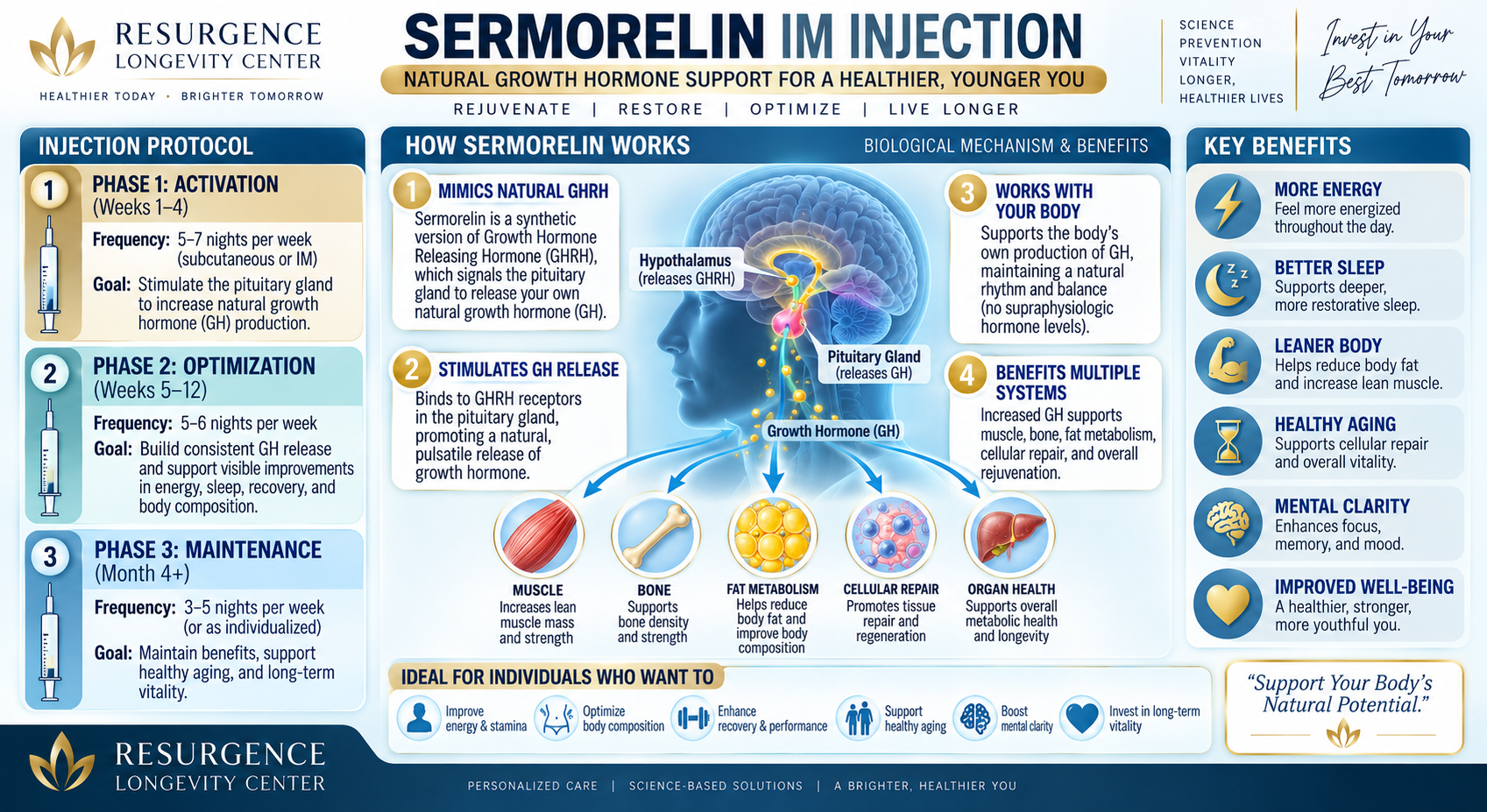
What Is Sermorelin?
Sermorelin is a synthetic analogue of a portion of human growth hormone–releasing hormone (GHRH). It acts at receptors in the pituitary gland and can stimulate the body’s own pulsatile release of growth hormone when the hypothalamic-pituitary axis can respond.
It is not growth hormone itself. A higher growth hormone or IGF-1 response does not automatically translate into improved energy, sleep, cognition, body composition, performance, or longevity.
How Sermorelin Works
- Pituitary signaling: Sermorelin mimics GHRH signaling and may prompt the pituitary to release growth hormone.
- IGF-1 pathway: Growth hormone stimulates production of insulin-like growth factor 1 (IGF-1), which participates in growth, metabolism, bone, and tissue processes.
- Physiologic limits: Response depends on pituitary function, age, health conditions, dose, timing, and other factors. “Natural” signaling does not mean risk-free or guarantee normal hormone levels.
- Not interchangeable with GH: Sermorelin, somatropin, and other growth-hormone secretagogues are different drugs with different evidence, regulation, dosing, and risks.
Evidence and Regulatory Context
Sermorelin previously had an FDA-approved product for certain pediatric growth-hormone evaluations and indications, but currently marketed compounded preparations are not FDA-approved products. FDA does not review compounded drugs for safety, effectiveness, or quality before marketing.
Evidence does not establish compounded sermorelin as a general anti-aging, longevity, cognitive-enhancement, sleep, bodybuilding, weight-loss, or athletic-performance treatment for otherwise healthy adults.
Medical Evaluation Comes First
Fatigue, poor sleep, reduced strength, weight change, and cognitive concerns have many possible causes. Evaluation may include:
- Symptoms, sleep, nutrition, exercise, alcohol use, and medication history
- Cardiovascular, metabolic, endocrine, pituitary, liver, kidney, and cancer history
- IGF-1 and other laboratory testing when clinically indicated
- Assessment for diabetes, sleep apnea, thyroid disease, anemia, depression, or other causes of symptoms
- Review of contraindications, interactions, fertility goals, and pregnancy status
- Whether endocrinology consultation or imaging is appropriate
Safety and Compounded-Product Quality
Possible effects can include injection-site reactions, headache, flushing, dizziness, nausea, fluid retention, joint or muscle discomfort, tingling, and changes in glucose regulation. Growth-hormone pathway stimulation can be inappropriate or risky for some patients, including those with active malignancy or certain pituitary conditions.
Compounded sterile injectables carry additional risks related to potency, contamination, sterility, and peptide quality. FDA has posted recalls and enforcement actions involving compounded sermorelin products, including sterility and out-of-specification concerns.
Route and Protocol Must Be Verified
The supplied infographic is titled “IM Injection” and also mentions subcutaneous use. The requested service is subcutaneous therapy. Intramuscular and subcutaneous administration must not be treated as interchangeable unless the prescribed product, pharmacy labeling, and clinician instructions explicitly support the route.
The pictured activation, optimization, and maintenance schedule is illustrative—not a universal evidence-based protocol. Dose, timing, frequency, monitoring, and stopping criteria must be individualized.
What Treatment Does Not Guarantee
Sermorelin therapy cannot guarantee more energy, deeper sleep, lean-muscle gain, fat loss, faster recovery, better memory or mood, cellular repair, “rejuvenation,” or longer life.
Objective goals, follow-up laboratory results, symptoms, adverse effects, and ongoing need should be reassessed rather than continuing treatment indefinitely because of a preset phase schedule.