Neuropathy Treatment with Alpha Lipoic Acid (ALA) IV Therapy
Experiencing burning, tingling, numbness, pins-and-needles sensations, or nerve discomfort? We provide individualized ALA IV therapy for appropriately selected patients in Palm Beach County.
Peripheral neuropathy occurs when nerves outside the brain and spinal cord become damaged or dysfunctional. Because these nerves carry signals between the central nervous system and the rest of the body, neuropathy can produce many uncomfortable sensations.
Burning sensations in the feet or hands
Tingling or “pins and needles”
Numbness or decreased sensation
Sharp, shooting, or electric-like nerve pain
Increased sensitivity to touch
Symptoms that become more noticeable at night
Discomfort involving the feet, legs, hands, or arms
Diabetes and impaired glucose metabolism are common contributors, but vitamin deficiencies, certain medications, chemotherapy, alcohol-related damage, and other medical conditions may also be associated with peripheral nerve symptoms. Proper medical evaluation is an important part of treatment.
Alpha Lipoic Acid IV Therapy for Neuropathy
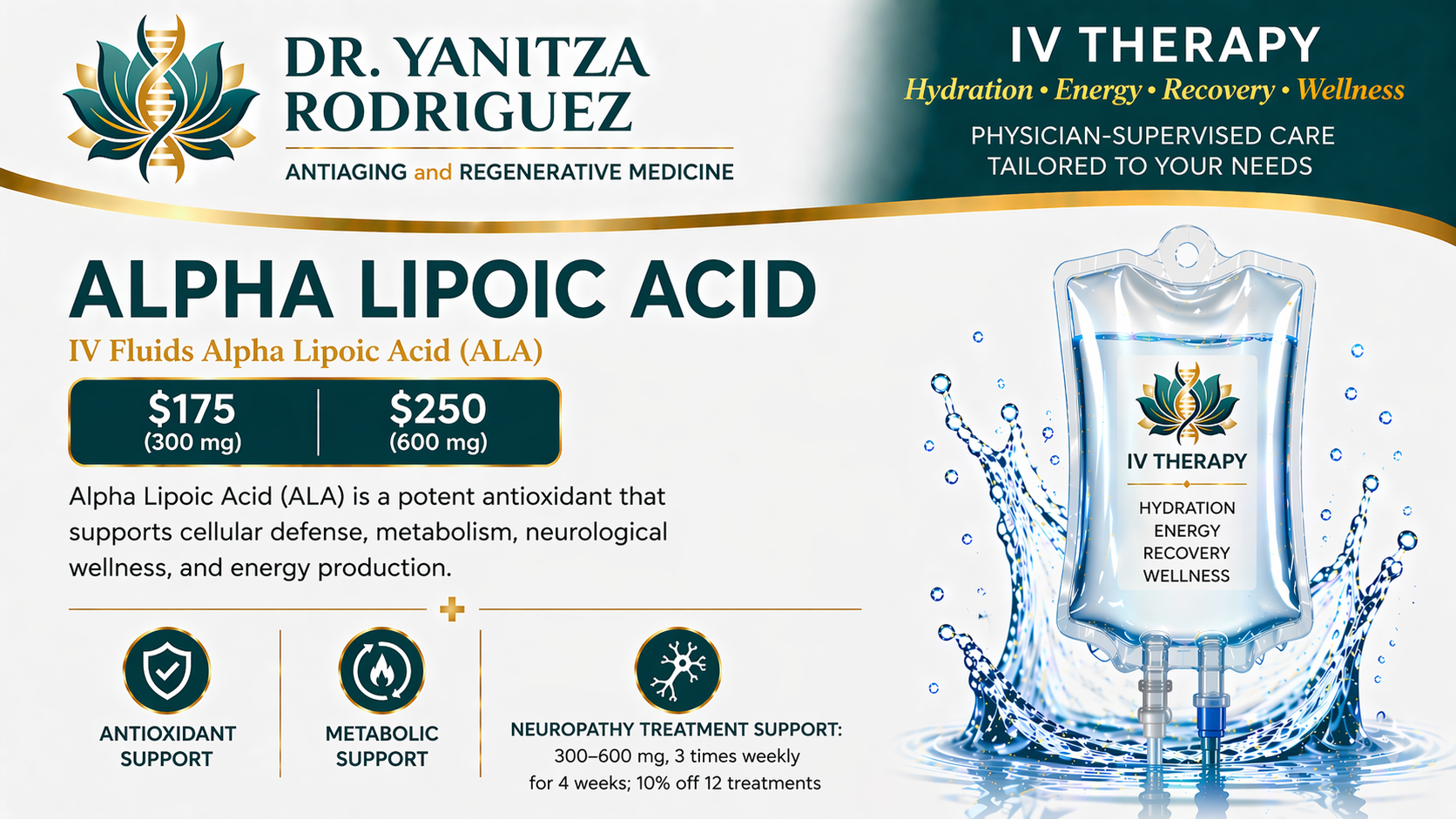
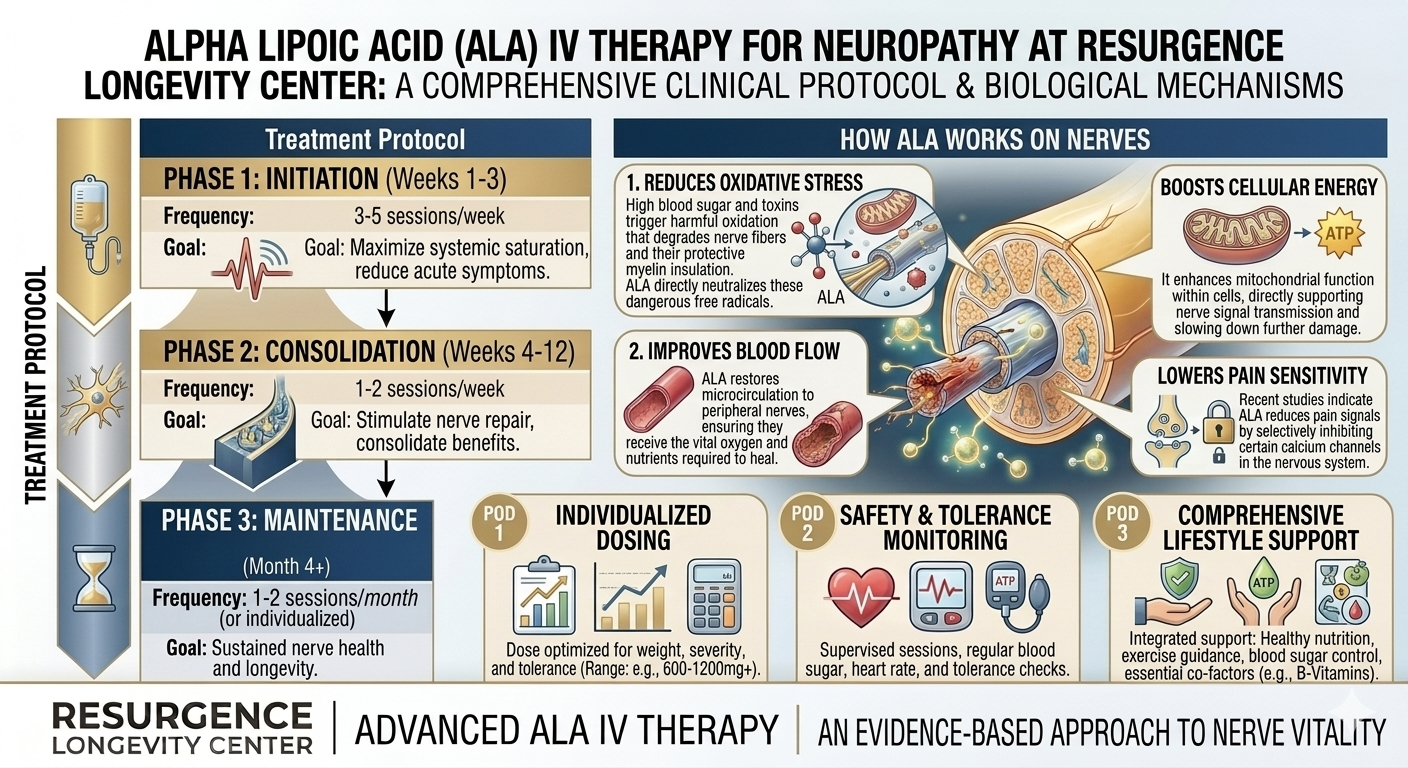
Alpha Lipoic Acid, commonly known as ALA, is a naturally occurring antioxidant that plays an important role in mitochondrial energy metabolism and the body’s antioxidant defense system. It has been clinically studied for its potential role in diabetic peripheral neuropathy, particularly for burning, pain, tingling, and numbness.
When administered intravenously, ALA bypasses gastrointestinal absorption and enters the bloodstream directly under medical supervision. At Yanitza Rodriguez MD PA, it is incorporated into a physician-guided neuropathy plan only when medically appropriate.
How May ALA IV Therapy Help?
Neuropathy symptom support: Clinical research has evaluated ALA for burning, pain, tingling, and numbness associated with diabetic peripheral neuropathy.
Powerful antioxidant support: ALA helps neutralize free radicals and supports the body’s defenses against oxidative stress.
Nerve and cellular function: ALA participates in mitochondrial energy metabolism, which helps cells—including nerve cells—produce energy.
Glucose metabolism: ALA has metabolic properties related to glucose utilization and insulin sensitivity.
Antioxidant regeneration: ALA interacts with other antioxidant systems and can help regenerate Vitamin C, Vitamin E, and Glutathione.
Individual responses vary, and improvement cannot be guaranteed.
Diabetic Neuropathy Treatment
Diabetic peripheral neuropathy is one of the most common forms of neuropathy and frequently affects the feet and legs. Symptoms may begin as tingling, burning, numbness, or unusual sensations in the toes and feet and become more noticeable over time.
ALA has been studied specifically for symptomatic diabetic peripheral neuropathy. ALA IV therapy does not replace appropriate diabetes management; controlling blood glucose and addressing cardiovascular and metabolic risk factors remain important parts of care.
Our Neuropathy Treatment Approach
Neuropathy is not a single disease. We begin with a medical evaluation rather than automatically recommending an infusion. Depending on your symptoms and history, potential contributors may include:
Diabetes, prediabetes, and insulin resistance
Vitamin deficiencies and metabolic abnormalities
Medication-related neuropathy
Chemotherapy-related peripheral neuropathy
Alcohol-related nerve damage
Other medical causes of peripheral nerve dysfunction
Additional evaluation or referral may be recommended. If ALA IV therapy is appropriate, treatment is individualized according to your medical history, symptoms, tolerance, and response. A series of infusions may be followed by clinical reassessment to determine whether additional or maintenance therapy is appropriate.
What Happens During an ALA IV Treatment?
Alpha Lipoic Acid is administered intravenously under medical supervision, allowing it to enter the bloodstream without relying on gastrointestinal absorption. Patients are monitored according to their individualized plan, and the dosage, infusion rate, frequency, and duration are determined by the medical provider.
Because every patient’s medical history is different, treatment protocols are not necessarily the same for everyone.
Enhanced IV Nutritional Support
Depending on individual needs, the overall IV therapy program may incorporate additional nutrients or antioxidants:
Alpha Lipoic Acid: The primary component, selected for its antioxidant and metabolic properties and its clinical study in peripheral neuropathy.
Glutathione: An important antioxidant involved in cellular protection and defense against oxidative stress.
Vitamin and antioxidant support: Additional nutrients may be considered when clinically appropriate.
Mineral support: Magnesium, zinc, manganese, or copper may be incorporated based on individual needs.
Not every ingredient or combination is appropriate for every patient. The treating medical provider determines the IV formulation.
Why Choose Physician-Guided Neuropathy Therapy?
Our approach evaluates the whole patient and considers whether metabolic, nutritional, medication-related, or other factors may contribute to symptoms.
Medical evaluation before treatment
Review of symptoms, medications, and possible causes
Individualized ALA IV treatment when appropriate
Monitoring and modification of the treatment plan
Coordination of additional evaluation or referral when needed
Frequently Asked Questions
Clear answers about ALA IV therapy and physician-guided neuropathy care.
Does Alpha Lipoic Acid help neuropathy?
ALA has been studied for peripheral neuropathy, particularly diabetic peripheral neuropathy. Research has evaluated its potential to improve burning, pain, tingling, and numbness. Results vary, and ALA is not appropriate for every cause.
Is ALA IV therapy only for diabetic neuropathy?
Diabetic neuropathy is the area in which ALA has been most extensively studied, but neuropathy can have many causes. Evaluation is necessary before determining whether ALA IV therapy is appropriate.
What does neuropathy feel like?
It may cause burning, tingling, numbness, pins-and-needles sensations, shooting pain, electric-like sensations, or unusual sensitivity, frequently beginning in the feet or hands.
How many treatments will I need?
There is no single protocol for everyone. Frequency depends on the suspected cause, severity and duration of symptoms, medical history, tolerance, and clinical response.
How quickly will I notice improvement?
Response varies. Some patients may notice changes during a treatment series, while others may experience limited or no improvement. ALA IV therapy is not a guaranteed treatment or cure.
Can ALA IV therapy reverse neuropathy?
The possibility of improvement depends significantly on the underlying cause and extent of nerve damage. ALA is supportive care and should not be considered a guaranteed way to reverse nerve damage.
Do I need a consultation before treatment?
Yes. Because neuropathy may result from diabetes, nutritional deficiencies, medications, chemotherapy, metabolic disorders, or other conditions, a medical evaluation is important before treatment begins.
Neuropathy Treatment in Palm Beach County
Visit Yanitza Rodriguez MD PA in Boynton Beach or Loxahatchee.
Boynton Beach
2623 S Seacrest Blvd, Suite 213 Boynton Beach, FL 33435
Take the Next Step Toward Managing Neuropathy Symptoms
Our medical team can evaluate your symptoms, review potential contributing factors, and determine whether Alpha Lipoic Acid IV therapy may be an appropriate part of your care plan.
Medical disclaimer: Alpha Lipoic Acid IV therapy is not intended to diagnose, cure, or guarantee improvement of peripheral neuropathy. Individual responses vary. A medical evaluation is required to determine whether treatment is appropriate. ALA IV therapy should not replace appropriate treatment of diabetes or other underlying medical conditions.