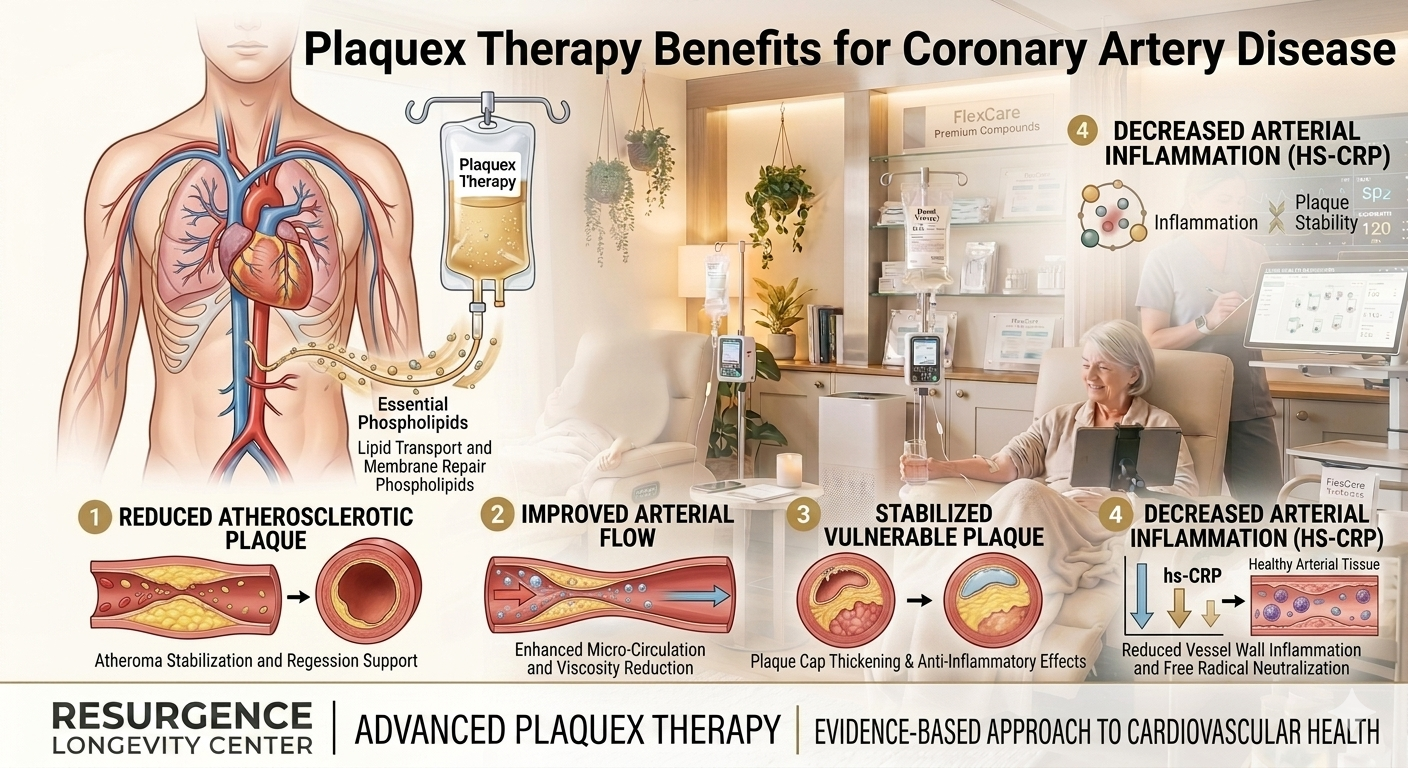
What Is Plaquex Therapy?
Plaquex is an intravenous phospholipid formulation primarily associated with phosphatidylcholine, an essential structural component of cell membranes. Phospholipids contribute to membrane flexibility, lipid transport, cellular signaling, and normal function throughout the cardiovascular and metabolic systems.
When medically appropriate, Plaquex is administered intravenously under physician supervision as one component of an individualized cardiovascular wellness plan.
Why Phospholipids Matter for Arterial Health
Healthy cellular membranes are important to vascular and endothelial function. Phospholipids participate in lipid transport and membrane repair processes that support normal cellular function.
Coronary artery disease is a serious medical condition involving plaque buildup and reduced blood flow in the coronary arteries. Plaquex does not replace cardiology evaluation, prescribed medications, risk-factor management, or established treatment.
Four Areas of Cardiovascular Support
- Atherosclerotic plaque support: The therapy is intended to support phospholipid availability and a healthier vascular environment. It must not be interpreted as a guaranteed method of removing or reversing arterial plaque.
- Arterial flow and microcirculation: Supporting cellular membranes and overall vascular wellness may contribute to the physiological environment needed for healthy circulation.
- Vulnerable plaque stability: Plaque stability is clinically important, but patients with known or suspected plaque require evidence-based cardiovascular assessment and treatment.
- Arterial inflammation and oxidative stress: A comprehensive plan may evaluate inflammatory markers such as hs-CRP and address modifiable cardiovascular risk factors.
These are supportive treatment goals, not guaranteed clinical outcomes.
A Comprehensive Cardiovascular Approach
Coronary artery disease is influenced by many factors. Our medical evaluation may consider:
- Blood pressure and cholesterol
- Diabetes and insulin resistance
- Smoking history and physical activity
- Nutrition, weight, and metabolic health
- Family and personal cardiovascular history
- Current medications and supplements
- Inflammatory and other relevant laboratory markers
Coordination with a cardiologist or additional testing may be recommended when appropriate.
Who May Consider Plaquex Therapy?
Plaquex may be discussed with appropriately selected adults seeking physician-guided support for cellular membrane health, arterial wellness, circulation, healthy aging, or metabolic and cardiovascular risk-factor management.
It is not emergency treatment and is not a substitute for statins, antiplatelet therapy, blood-pressure treatment, diabetes care, cardiac procedures, or any treatment prescribed by a cardiologist.
What to Expect During Treatment
Before treatment, patients receive a medical evaluation. The prescribed IV formulation is administered under medical supervision. Dose, infusion rate, frequency, and total number of treatments are individualized according to medical history, medications, goals, tolerance, and clinical response.
There is no single protocol appropriate for everyone, and not every patient with cardiovascular disease is a candidate.
More Than an IV
Our approach extends beyond an infusion. A personalized plan may also address nutrition, physical activity, glucose control, blood pressure, lipid management, smoking cessation, sleep, weight, and adherence to evidence-based cardiovascular care.