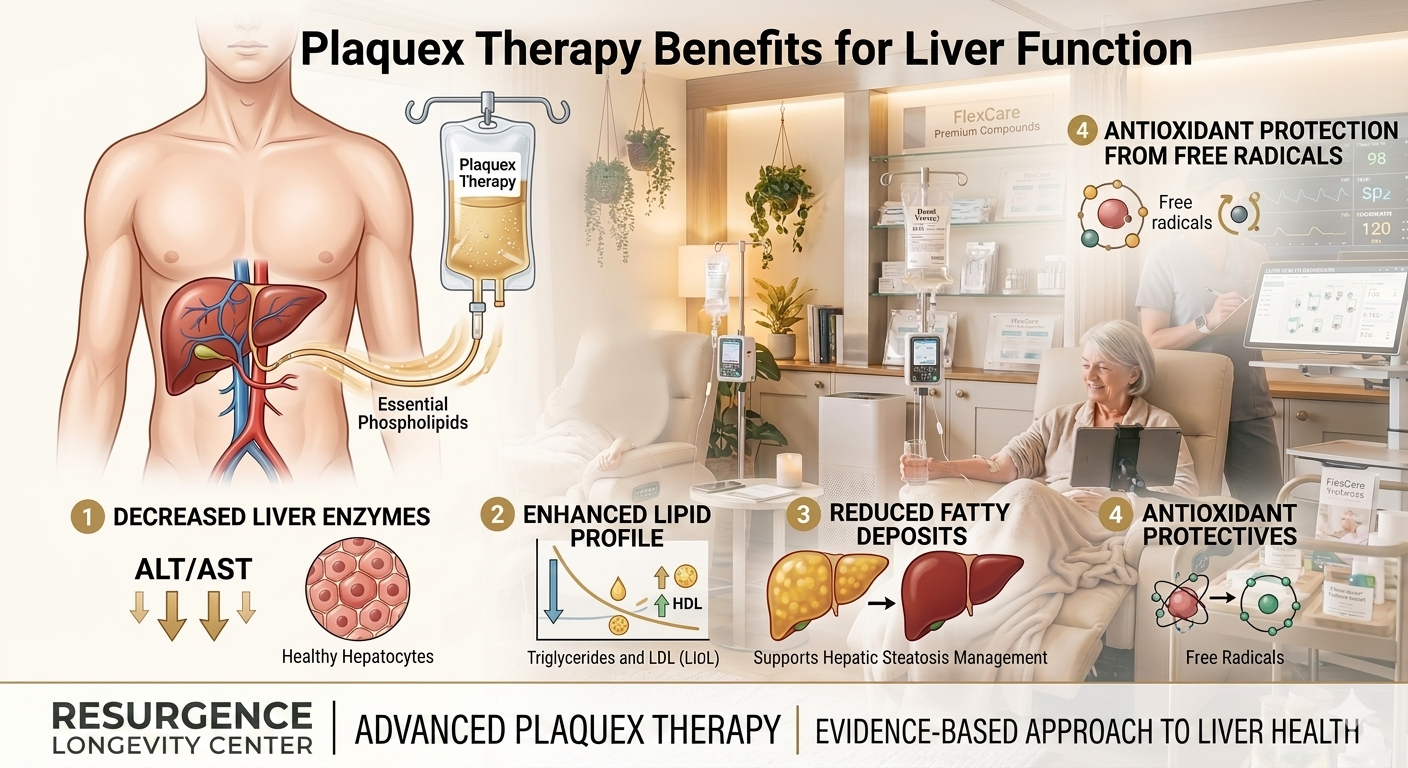
What Is Plaquex Therapy?
Plaquex is an intravenous phospholipid formulation primarily associated with phosphatidylcholine, an essential structural component of cell membranes. Phospholipids contribute to membrane flexibility, lipid transport, cellular signaling, and normal metabolic function.
When medically appropriate, Plaquex is administered intravenously under physician supervision as one supportive component of an individualized wellness plan.
Why Phospholipids Matter for Liver Health
The liver plays central roles in metabolism, lipid transport, nutrient processing, and detoxification. Healthy cell membranes are important to normal hepatocyte function, while phosphatidylcholine participates in lipid transport and membrane structure.
Abnormal liver enzymes or fatty liver can have many causes and require proper evaluation. Plaquex does not replace diagnostic testing, treatment of the underlying cause, prescribed medication, or specialist care.
Four Areas of Liver-Health Support
- Liver-enzyme monitoring: ALT and AST can reflect liver-cell injury but do not measure all aspects of liver function. Plaquex is not guaranteed to lower liver enzymes, and abnormal results require medical evaluation.
- Lipid-profile support: A comprehensive plan may address triglycerides, LDL cholesterol, HDL cholesterol, glucose control, nutrition, and weight alongside established medical care.
- Fatty-liver support: Metabolic health, gradual weight management, physical activity, and treatment of contributing conditions remain central. Plaquex is not proven to remove hepatic fat or reverse steatosis.
- Antioxidant support: Phospholipids and a broader wellness plan may support cellular defenses against oxidative stress, but protection from liver injury is not guaranteed.
These are supportive treatment goals rather than guaranteed clinical outcomes.
A Comprehensive Liver-Health Approach
Liver health can be influenced by many factors. A medical evaluation may consider:
- ALT, AST, alkaline phosphatase, bilirubin, albumin, and other laboratory findings
- Metabolic dysfunction-associated steatotic liver disease (MASLD)
- Diabetes, insulin resistance, cholesterol, and triglycerides
- Weight, nutrition, and physical activity
- Alcohol use and viral hepatitis risk
- Current medications, supplements, and possible liver toxicity
- Imaging, fibrosis assessment, or specialist referral when indicated
Additional testing or referral to a gastroenterologist or hepatologist may be recommended.
Who May Consider Plaquex Therapy?
Plaquex may be discussed with appropriately selected adults interested in physician-guided support for cellular membrane health, lipid and metabolic wellness, antioxidant defenses, and healthy aging.
People with abnormal liver tests or known liver disease should not begin IV therapy without medical review of the diagnosis, medications, supplements, alcohol exposure, and laboratory results.
What to Expect During Treatment
Before treatment, patients receive a medical evaluation. The prescribed formulation is administered intravenously under medical supervision. Dose, infusion rate, frequency, and total number of treatments are individualized according to liver status, medical history, medications, goals, tolerance, and clinical response.
There is no single protocol appropriate for everyone, and not every patient with liver disease is a candidate.
More Than an IV
A personalized liver-health plan may also address nutrition, weight, glucose control, cholesterol, alcohol intake, medication and supplement safety, physical activity, and adherence to established primary-care or specialist recommendations.