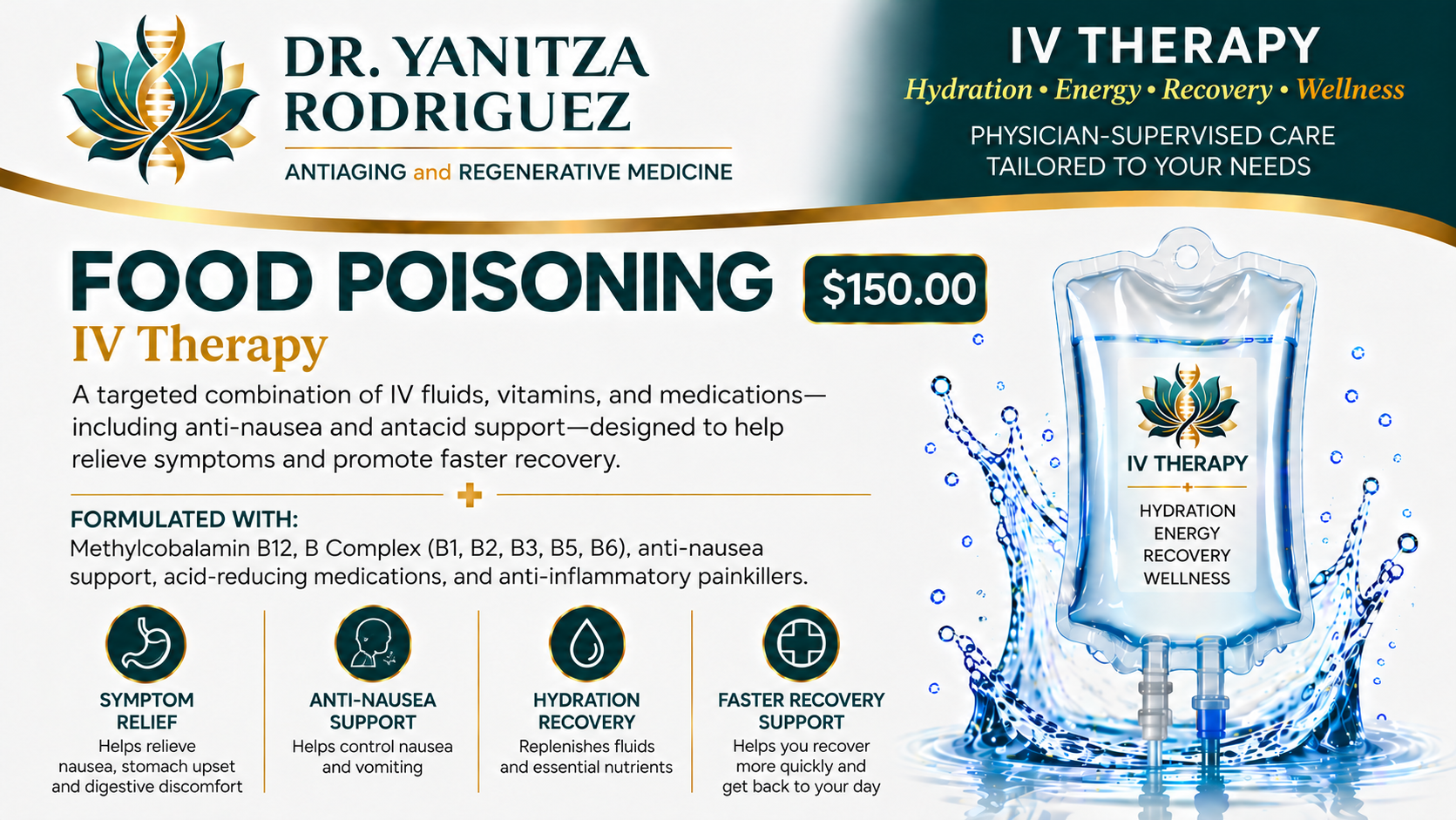
Medical evaluation with individualized IV fluids, electrolyte replacement, and symptom support for appropriate adults experiencing vomiting, diarrhea, and dehydration.
Food poisoning is an infection or irritation of the digestive tract caused by contaminated food or drinks. Common symptoms include diarrhea, stomach pain or cramps, nausea, vomiting, and fever. Most cases improve on their own, but dehydration and other complications can become serious.
A medical evaluation helps determine whether outpatient supportive care is appropriate or whether testing, prescription treatment, or emergency care is needed.
How IV Therapy May Provide Support
Bypasses an irritated stomach: IV delivery does not rely on keeping oral fluids or medication down. It does not mean every nutrient is fully retained or that the underlying infection is treated.
Provider-selected anti-nausea medication: Prescription medication such as ondansetron may be considered after reviewing symptoms, medications, heart rhythm risk, pregnancy status, and contraindications.
Fluid replacement: IV fluids can help treat clinically significant dehydration when oral intake is not adequate. The fluid type, amount, and rate must be individualized.
Electrolyte support: Sodium, potassium, magnesium, or other components may be considered when appropriate. Electrolytes should not be added automatically without attention to kidney function, medications, and clinical findings.
Recovery time varies. IV therapy cannot guarantee relief within 30–60 minutes or cure the cause of food poisoning.
Oral Rehydration Is Often the First Step
Replacing lost fluids and electrolytes is the most important supportive treatment. Many adults with mild illness can recover with small, frequent sips of water, broth, diluted juice, sports drinks, or an oral rehydration solution.
IV treatment may be considered when vomiting prevents adequate oral intake or a clinician identifies dehydration that requires more direct replacement.
A Medical Evaluation Comes First
Symptoms that seem like food poisoning can have other causes. The medical team may review:
Timing, duration, and severity of vomiting or diarrhea
Recent foods, travel, sick contacts, and possible outbreak exposure
Fever, blood or mucus in stool, and abdominal pain
Hydration status, vital signs, and urine output
Kidney, heart, liver, and immune-system conditions
Pregnancy, age, medications, allergies, and recent antibiotics
Whether blood tests, stool testing, antibiotics, or hospital care may be needed
When to Seek Prompt or Emergency Care
Seek medical care promptly for bloody diarrhea, diarrhea lasting more than three days, fever above 102°F, frequent vomiting that prevents keeping liquids down, severe abdominal pain, black or tarry stool, confusion, fainting, very little urination, dry mouth, or dizziness when standing.
Pregnant patients, young children, older adults, and people with weakened immune systems or chronic medical conditions may need earlier evaluation. Severe dehydration and neurologic symptoms require urgent or emergency care.
What to Expect During Treatment
The provider reviews symptoms and medical history, checks whether outpatient treatment is appropriate, and determines the fluid, medication, electrolyte, and monitoring plan. Treatment response and discharge instructions are individualized.
Some bacterial or parasitic illnesses need targeted prescription treatment, while certain diarrheal infections require avoiding specific over-the-counter anti-diarrheal medicines.
After the Infusion
Continue oral hydration as directed, gradually resume food as tolerated, follow medication instructions, and seek additional care if symptoms worsen or fail to improve. Keep food receipts or labels and consider reporting suspected foodborne illness to the local health department when advised.
Frequently Asked Questions
Important information about IV support for food-poisoning symptoms.
Does IV therapy cure food poisoning?
No. It may support hydration and symptom management, but it does not automatically eliminate the bacteria, virus, parasite, or toxin causing the illness.
Will I recover in 30–60 minutes?
Some people may feel better after fluids or anti-nausea treatment, but recovery time varies by cause and severity. No specific recovery time can be guaranteed.
When are IV fluids considered?
They may be considered when vomiting prevents sufficient oral intake or when clinical evaluation identifies dehydration requiring direct fluid replacement.
Do I need antibiotics?
Most food poisoning does not require antibiotics. A clinician determines whether targeted treatment or testing is appropriate based on symptoms, risk factors, and suspected cause.
Who may not be appropriate for outpatient IV care?
People with severe dehydration, bloody stool, high fever, severe pain, confusion, neurologic symptoms, significant medical risk factors, or possible complications may need emergency or hospital-based evaluation instead.
Food-Poisoning IV Support in Palm Beach County
Visit Yanitza Rodriguez MD PA in Boynton Beach or Loxahatchee.
Boynton Beach
2623 S Seacrest Blvd, Suite 213 Boynton Beach, FL 33435
Our medical team can review your symptoms and determine whether outpatient IV treatment, diagnostic testing, prescription care, or a higher level of care is appropriate.
Medical disclaimer: IV therapy is supportive care and is not intended to diagnose, cure, or guarantee rapid recovery from food poisoning. It does not replace emergency evaluation, diagnostic testing, antimicrobial treatment when indicated, or hospital care for severe illness. Individual responses vary, and medical evaluation is required before treatment.