What Are B-Complex Injections?
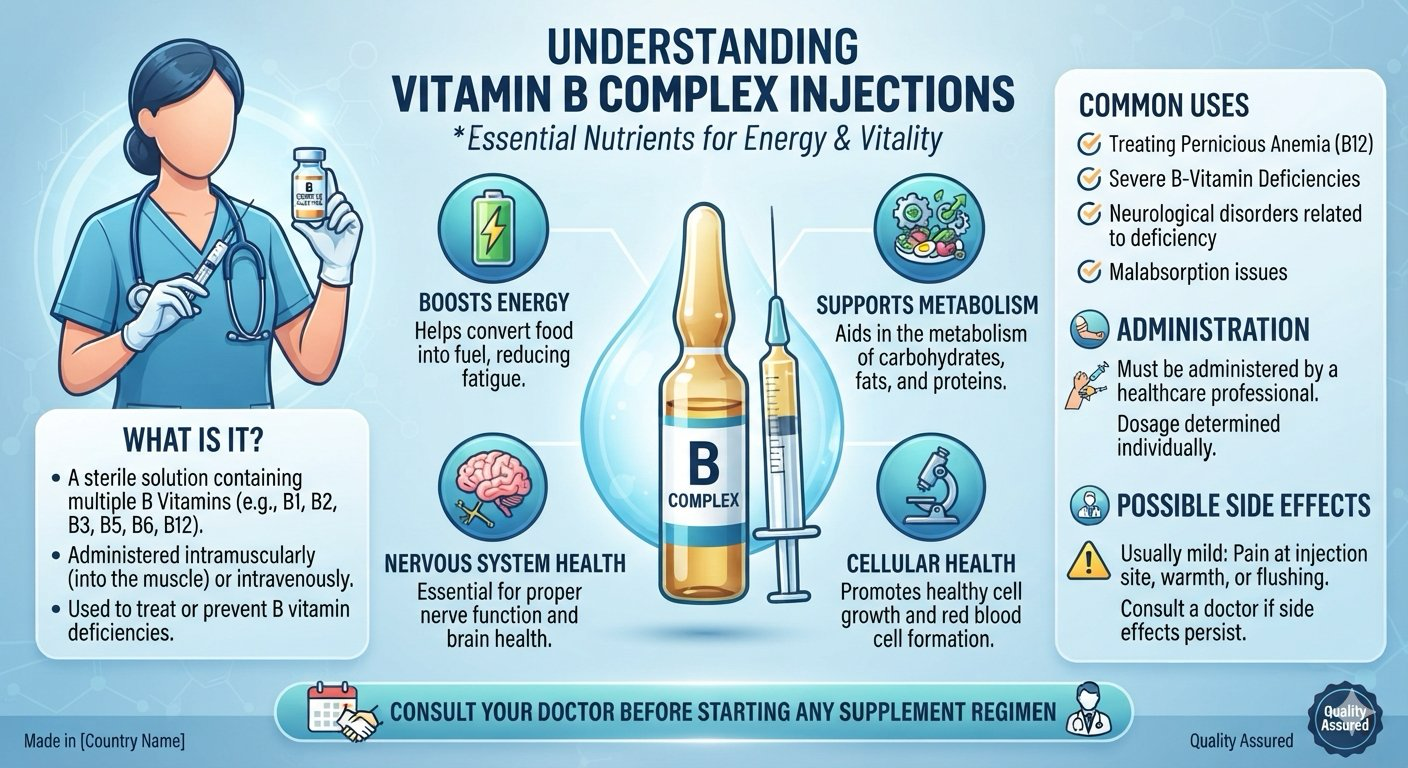
B-complex injections are sterile formulations containing multiple water-soluble B vitamins. Depending on the prescribed product, these may include thiamin (B1), riboflavin (B2), niacinamide (B3), pantothenic acid (B5), pyridoxine (B6), and cobalamin (B12).
The exact ingredients and amounts vary by formulation. Treatment is usually given into a muscle by a qualified professional and should be selected according to the patient’s history, symptoms, diet, medications, and laboratory findings when appropriate.
What B Vitamins Do
- Energy metabolism: B vitamins act as coenzymes that help the body process carbohydrates, fats, and proteins. They do not act as stimulants or guarantee an energy increase when no deficiency exists.
- Nervous-system function: Several B vitamins contribute to normal nerve and brain function. Deficiency—particularly B12 deficiency—can cause neurologic symptoms and may lead to lasting nerve injury if untreated.
- Blood-cell formation: B12, folate, B6, and other nutrients participate in normal blood-cell production. The cause and type of anemia must be identified before treatment.
- Cellular metabolism: B vitamins support numerous enzyme reactions, DNA-related processes, and normal cell function.
Who May Be Considered?
Injection therapy may be considered for selected adults with a confirmed or strongly suspected B-vitamin deficiency, pernicious anemia or another cause of B12 malabsorption, gastrointestinal disease or surgery affecting absorption, restricted dietary intake, or medication-related risk.
Pernicious anemia is specifically treated with Vitamin B12 replacement—not automatically with every B-complex formulation. Oral therapy is effective for many patients and may be preferable depending on the nutrient, diagnosis, and ability to absorb it.
Evaluation Before Treatment
Fatigue, weakness, numbness, memory concerns, and anemia have many possible causes. The medical team may review:
- Symptoms, diet, alcohol use, and prior supplements or injections
- Gastrointestinal surgery, celiac disease, Crohn’s disease, and other malabsorption risks
- Kidney or liver disease, pregnancy, and allergies
- Medicines that can affect B-vitamin status or interact with treatment
- Blood count, B12, folate, methylmalonic acid, homocysteine, or other tests when clinically indicated
- Whether a targeted vitamin, oral therapy, or further diagnostic evaluation is more appropriate
Safety and Possible Side Effects
Possible effects include injection-site pain, redness, bruising, warmth, nausea, dizziness, or flushing. Niacin-containing products can cause flushing; formulation and dose matter.
More is not always better. Excessive or prolonged Vitamin B6 exposure can cause sensory nerve damage, and some B vitamins can interact with medicines or affect laboratory results. Seek emergency care for trouble breathing, facial or throat swelling, fainting, or another sign of a severe allergic reaction.
What to Expect
Your visit begins with a consultation, medication review, and assessment of relevant laboratory findings. If treatment is appropriate, the clinician verifies the specific formulation and dose before administering it into a muscle using sterile technique.
Frequency and duration are individualized. A B-complex injection is not guaranteed to produce immediate energy, improve metabolism, or resolve fatigue when the underlying cause is unrelated to deficiency.
After the Injection
Mild soreness or redness can occur at the injection site. Follow the prescribed schedule, avoid adding high-dose B-vitamin products without review, and complete follow-up testing when requested.
Response depends on the nutrient involved, severity and cause of deficiency, and other health conditions. Persistent fatigue, weakness, anemia, numbness, or cognitive symptoms warrant further evaluation.