
Microneedling
A controlled procedure whose depth, technique, indications, and recovery require clinical judgment.
An Innovative Approach to Skin Care
Explore how PDRN, a DNA-derived ingredient, is being studied in aesthetic skin treatments and how microneedling may be incorporated into an individualized skin care plan.
Polydeoxyribonucleotide (PDRN) is a preparation containing DNA fragments that may be derived from purified fish DNA, including salmon or trout sources. It has been studied in tissue-repair and skin-related research, but evidence varies by formulation, delivery method, and clinical indication.
“Salmon DNA” is a commonly used marketing description; it does not mean live cells or whole salmon DNA are placed into the skin. Products and formulations differ, so product quality, intended use, evidence, and regulatory status require clinician review.
Evidence matters: PDRN should not be assumed to regenerate skin, reverse aging, or have the same evidence across formulations and routes.

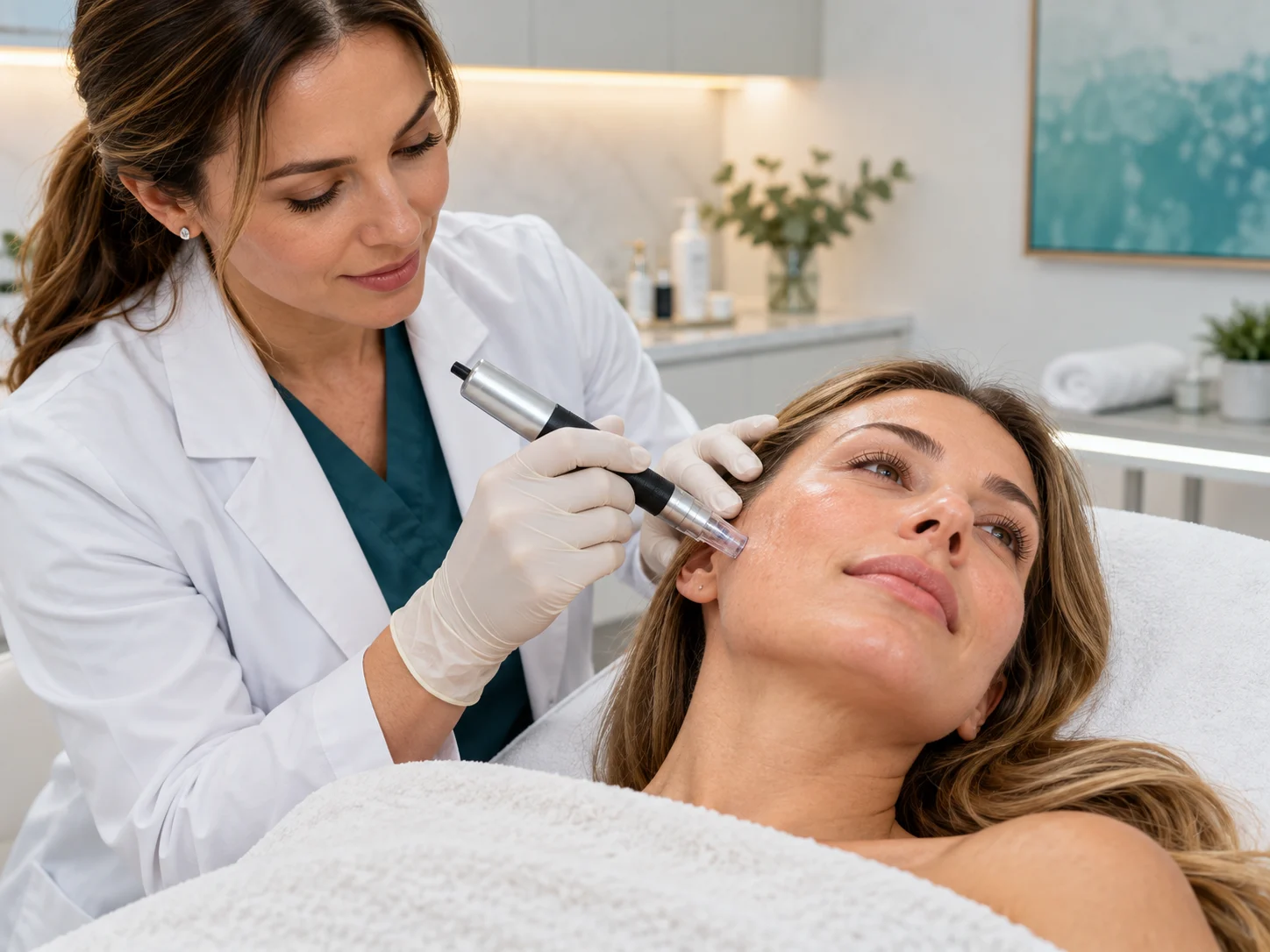
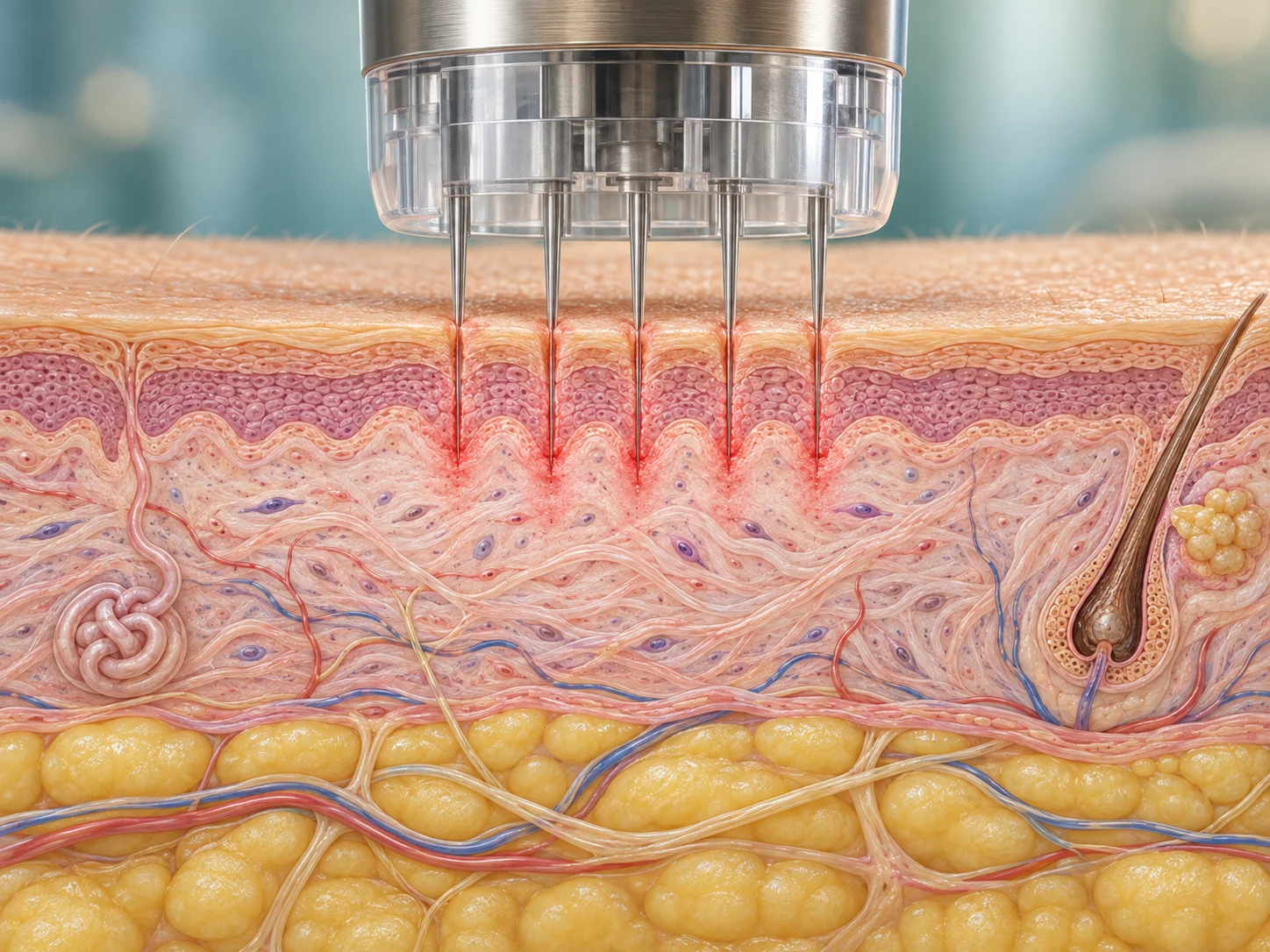
Microneedling uses fine needles to create controlled punctures in the skin. These micro-injuries initiate wound-healing responses and may support improvement in selected texture concerns, certain acne scars, and some fine lines.
Treatment depth, device selection, clinical technique, skin preparation, aftercare, and patient characteristics influence risk and recovery. Professional evaluation is necessary before treatment.
Some practices explore combining microneedling with selected topical formulations. Evidence specifically supporting PDRN delivered through microneedled skin is limited, and outcomes cannot be assumed from studies of other formulations or delivery routes.
A controlled procedure whose depth, technique, indications, and recovery require clinical judgment.
Sterility, formulation, intended route, product quality, and regulatory status require review.
Barrier-safety note: Microneedling disrupts the skin barrier. This page does not recommend applying nonsterile products to fresh microchannels or imply proven superiority for the combination.
Established microneedling evidence should not automatically be attributed to PDRN. Recommendations depend on evaluation, formulation, treatment method, and available evidence.
Professional microneedling may be considered for selected texture concerns.
Some approaches may improve the appearance of certain fine lines; results vary.
Professional microneedling may be considered for selected acne scars after individualized evaluation.
PDRN is being investigated in aesthetic care, but outcomes depend on formulation, method, and evidence.
Review history, concerns, and goals.
Assess condition, suitability, and contraindications.
Determine whether treatment and any adjunct are appropriate.
Follow the clinician-approved protocol.
Review healing, response, and further care.
Temporary redness, swelling, sensitivity, and pinpoint bleeding may occur. Other risks include infection, pigment changes, scarring, and allergic or inflammatory reactions. Appropriate skin preparation and aftercare are important.
Certain skin conditions, active infections, or other contraindications may require treatment to be postponed or avoided. For fish-derived formulations, allergy history and product-specific warnings require review. Recovery varies with treatment depth, skin characteristics, and clinical technique.
PDRN contains DNA fragments that may be derived from purified fish DNA. The marketing term does not mean live cells or whole salmon DNA are placed into skin.
Fine needles create controlled punctures that initiate wound-healing responses. Technique and depth require professional judgment.
Some practices explore adjunctive formulations, but evidence for PDRN delivered through microneedled skin is limited.
FDA status depends on the exact product, intended use, route, and claims. FDA-authorized microneedling devices are not authorized to deliver cosmetics, drugs, biologics, or blood products into skin.
Discomfort varies. Patients may feel pressure, vibration, or stinging; comfort options can be discussed before treatment.
There is no universal schedule. Recommendations depend on the concern, technique, response, tolerability, and evidence.
Possible effects include redness, swelling, sensitivity, pinpoint bleeding, infection, pigment change, scarring, and allergic or inflammatory reactions.
Fish allergy history and product-specific ingredients and warnings require clinician review before any decision.
Recovery varies with depth, technique, skin characteristics, and aftercare; an exact period should not be assumed.
Active infection, certain skin conditions, healing concerns, medicines, allergy history, pregnancy status, or other contraindications may affect suitability.
Schedule a personalized consultation with Dr. Yanitza Rodriguez to discuss your skin concerns and learn whether microneedling or other aesthetic treatments may be appropriate for you.